
We have, for the most part, been conditioned to think of the body in parts. Dentistry sits in one category, skincare in another, stress somewhere more abstract and difficult to quantify. It’s a structure that suits specialisation, but not understanding. At a discreet clinic in Islington, that separation is being gently challenged. The science, it turns out, is firmly on his side.
It often begins subtly. Not pain, exactly, but a persistent tightness in the jaw—frequently dismissed as stress. Night-time grinding, noted by a partner. A gradual build of tension that settles into something more constant: a dull pressure behind the eyes, a heaviness in the face that no topical remedy seems to address.
Such symptoms are typically treated in isolation, if they are treated at all. Yet they can point to a more complex interplay between dental health, muscular tension, and systemic stress.
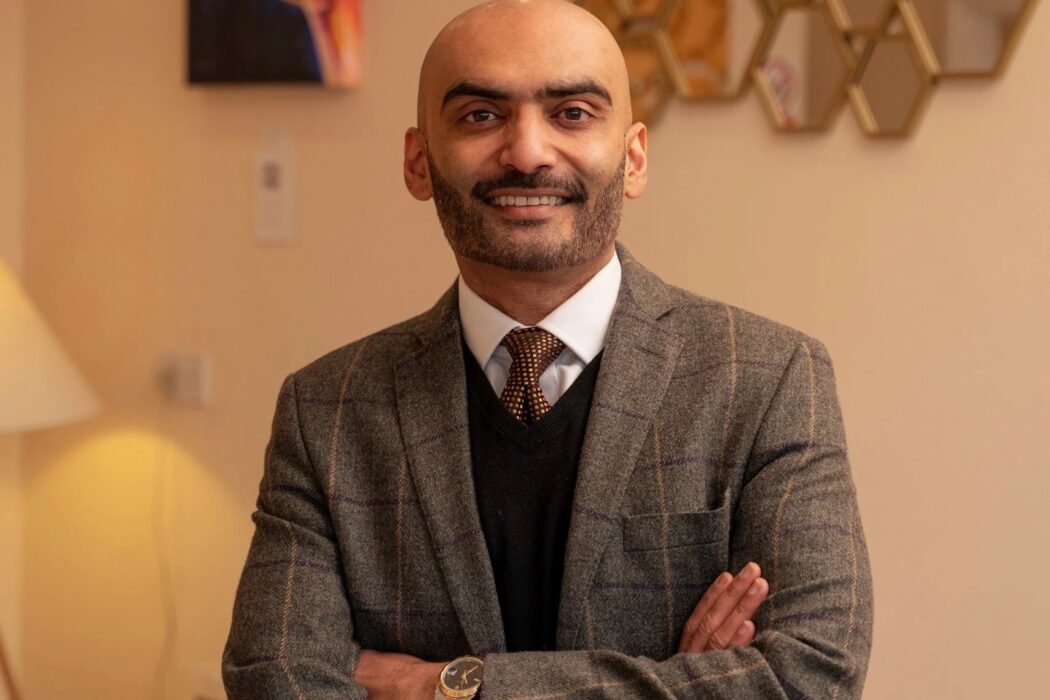
Dr Vishal Patel is not a typical dentist. His credentials speak for themselves: a Bachelor of Dental Surgery from the University of Liverpool, a Master’s in Restorative and Aesthetic Dentistry from the University of Manchester, advanced training with the American Academy of Aesthetic Dentistry, and fellowships in facial aesthetics from institutions like IFAAS and the Harley Academy. Few practitioners operate as comfortably across both advanced restorative work and skin-focused aesthetic treatments, a duality that underpins his broader approach.
But what sets him apart is his philosophy. “We have been trained to treat the body in silos,” he says, settling into the consultation chair. “Dentistry over here. Dermatology over there. Mental health somewhere else entirely. But that is not how the body operates. The mouth is not a separate system. It is connected to everything.”
This is not holistic rhetoric. It is backed by a growing body of clinical evidence.
Take the link between gum disease and cardiovascular health, for instance. A landmark 2023 study published in the Journal of Clinical Periodontology analysed data from over 1.6 million patients and found that individuals with periodontitis (severe gum disease) had a 28% higher risk of a first cardiovascular event, specifically heart attack or stroke, compared to those with healthy gums. The mechanism is now well understood: the same bacteria that inflame the gums can enter the bloodstream, contributing to arterial inflammation and plaque formation. Looking after your gums, in other words, is looking after your heart.

Then there is the gut-skin axis, a field that has exploded in recent years. Research increasingly shows that oral health is a critical node in this network. The oral microbiome; the community of bacteria living in the mouth influences the gut microbiome, which in turn influences skin conditions like acne, rosacea, and eczema. A 2024 review in Frontiers in Microbiology highlighted that dysbiosis, an imbalance in the oral cavity, can trigger systemic inflammation that manifests on the skin. It is why Dr Patel’s clinic incorporates nutritional advice into treatment plans, recognising that what you eat and how you care for your mouth directly affects your complexion.
And then there is stress; the invisible thread that runs through all of it. The link between psychological stress and skin ageing is now well documented. Cortisol, the primary stress hormone, degrades collagen and elastin, accelerates glycation, the stiffening of skin fibres, and impairs the skin’s barrier function. A 2023 study from the International Journal of Cosmetic Science found that women with high perceived stress showed significantly more signs of premature ageing; including fine lines, reduced elasticity, and increased transepidermal water loss than their lower-stress counterparts, regardless of age or skincare routine.
For Dr Patel, these connections are not abstract. They are the foundation of how he practices.
At Dental & Wellness London, the model rests on four pillars: dentistry, skin aesthetics, wellness nutrition and lifestyle, and mindfulness. A patient might come in for Invisalign and end up having a conversation about how their grinding is linked to anxiety, then be referred to the clinic’s wellness coach for stress-management strategies, and eventually explore how facial aesthetics can release chronic tension in the jaw muscles; all while receiving nutritional guidance to support gum health and skin vitality.
“It sounds like a lot,” Dr Patel admits, “but for the patient, it is actually simpler. Instead of seeing five different specialists who never speak to each other, they see one team that sees them as a whole.”
In practice, consultations extend beyond a purely dental focus. Alongside a clinical examination, patients are asked about sleep, diet, and stress levels. Factors that are increasingly recognised as contributing to conditions such as facial tension. The physical effects of grinding, for example, are not limited to enamel wear; over time, they can influence muscular development in the jaw, subtly affecting facial structure and expression.
“We address this from multiple angles,” he said. “A nightguard, certainly. But also: a conversation with our wellness coach about stress management. A nutritional review to support overall inflammation levels. And, if the patient is open to it, a very gentle approach to relaxing those overworked jaw muscles.”
This latter category, facial aesthetics, remains an area where patient expectations can vary. But Dr Patel’s approach is characteristically restrained. His training in medical aesthetics (including certifications from the Harley Academy, Lynton Lasers, and comprehensive facial aesthetics courses accredited by EACCME) means he uses injectables not to change faces, but to release patterns of tension that have become fixed. “The goal is never to alter someone,” he says. “It is to help them look like themselves, but rested. The version of them that is not carrying the weight of chronic stress in their expression.”
Outcomes, by design, are subtle. Rather than dramatic change, the emphasis is on incremental improvement, reduced tension, improved comfort, and, in some cases, a visible softening of features associated with chronic strain.
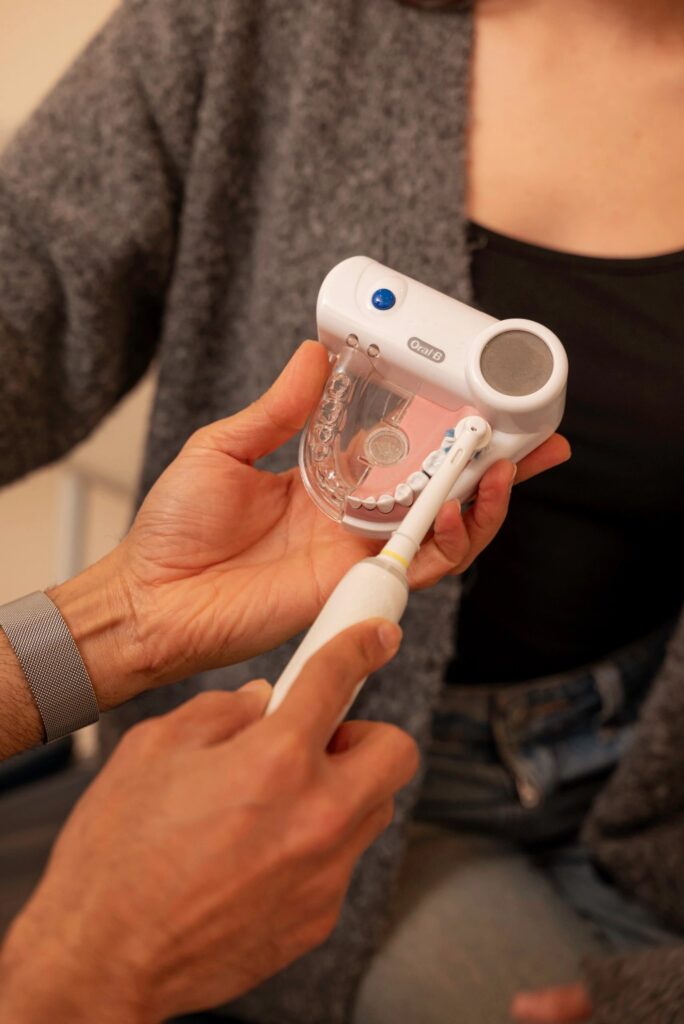
What distinguishes the model is its coherence. By bringing together dentistry, aesthetics, and wellness under one framework, the clinic reflects a growing shift away from fragmented care towards a more integrated view of patient health. Not every case will require such an approach, but for those presenting with overlapping concerns, the benefit lies in continuity rather than escalation. The dentist who understands your skin. The aesthetic practitioner who understands your stress. The team understands that a healthy smile is not just about straight teeth but about a body in balance.
When asked about the increasing interest in integrative practices, Patel is measured. “People are tired of being fragmented,” he said. “They want someone to see the connections they instinctively know are there. We are just acknowledging what the science has been telling us for years: that oral health is systemic health, that stress ages us from the inside out, and that true wellness is not a product you can buy; it is a way of seeing yourself whole.”
It is a message that feels especially resonant now. In an era of specialist overload, there is something deeply reassuring about a clinic that refuses to treat you as a collection of parts. Where the person looking at your teeth is also thinking about your heart, your skin, your stress, and your gut. Where the four pillars are not separate silos but a single, integrated foundation.
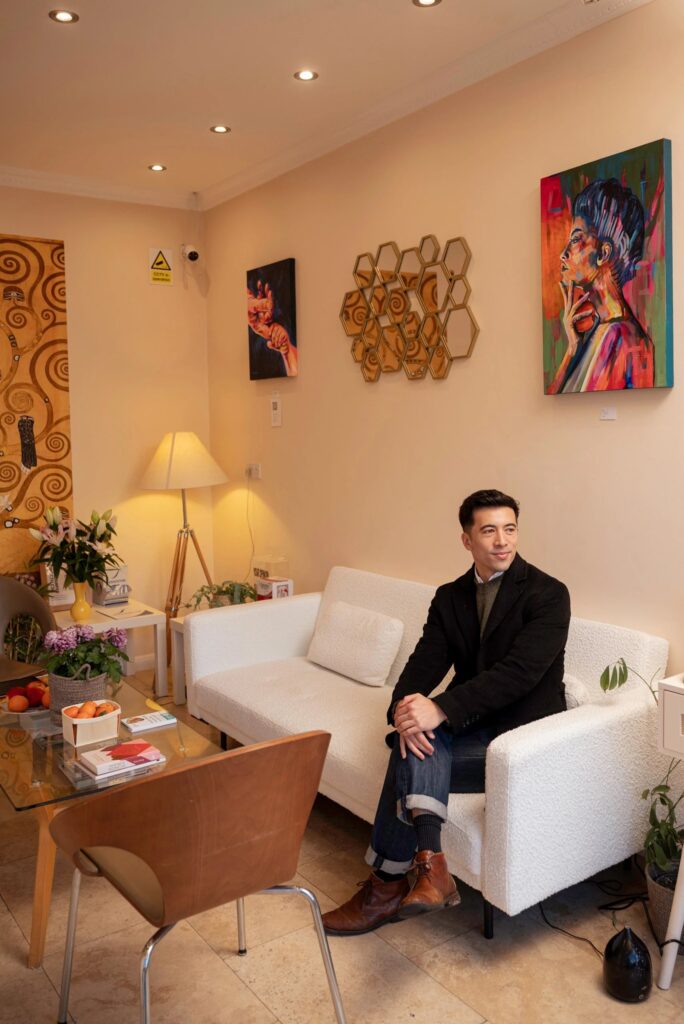
As ever, if one is seeking exceptional private dental care in Islington, one might look no further. At Dental & Wellness London, it is merely the starting point. The real work, the radical act, is treating you as the connected, complicated, whole person you have always been.