On the right bank of Paris, where the Seine catches the setting light of an April evening, and the Eiffel Tower glitters just beyond the window, sits a restaurant that knows exactly what it’s good at – and wears it lightly.
The drive-in is spectacular: past le Pont de l’Alma, the Seine opens up on your left, and then the Eiffel Tower, across the water, doing what it always does to people who claim to be over it.
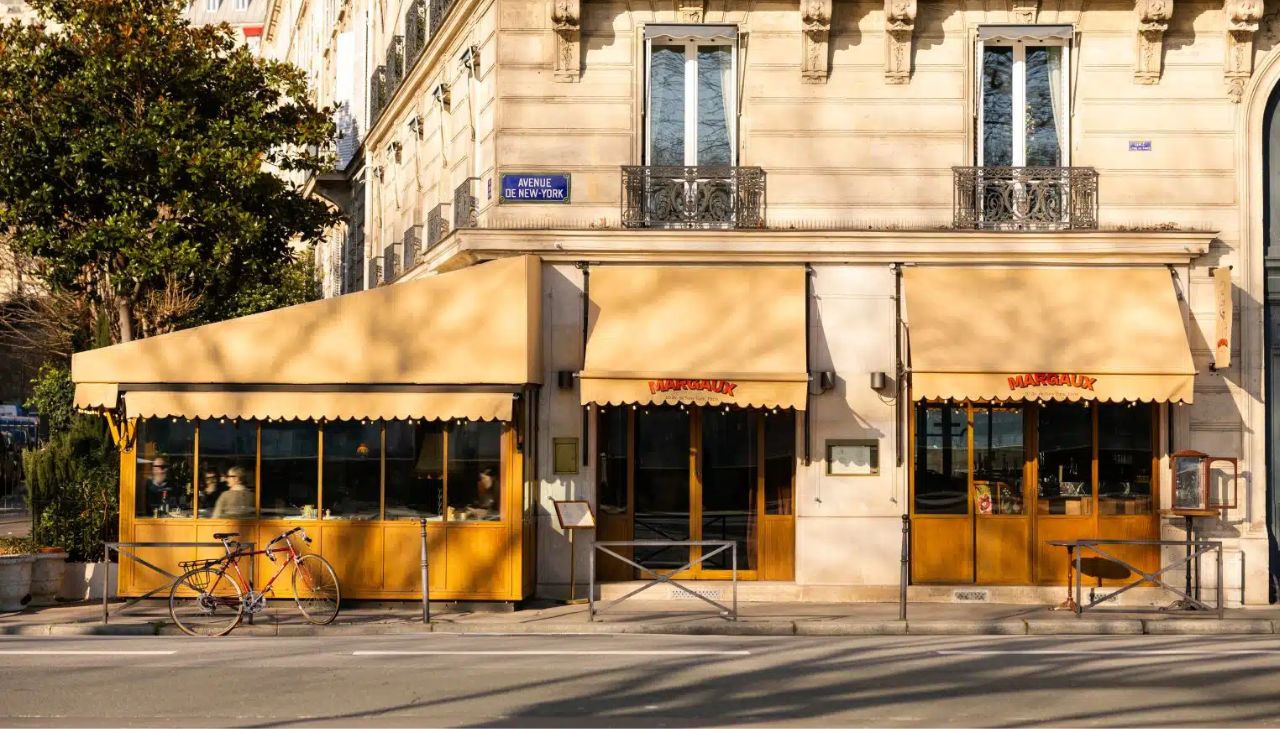
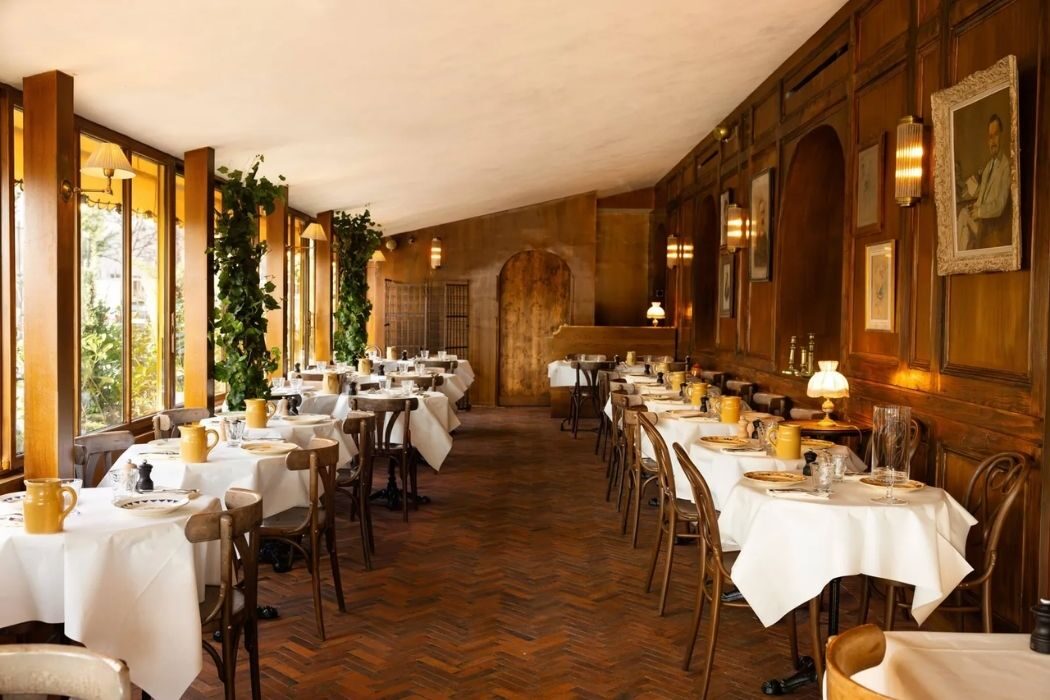
Margaux sits on the stretch of the 16th arrondissement, on Avenue de New York. Arrive at seven on a Friday and the room is alive – laughter and conversation rising from every table, glasses raised, the particular hum of a room that has been doing this, and doing it well, for some time. White tablecloths, dark wood, candlelight that flatters without trying. By half past nine, a queue of walk-ins had formed outside. Margaux earns it.
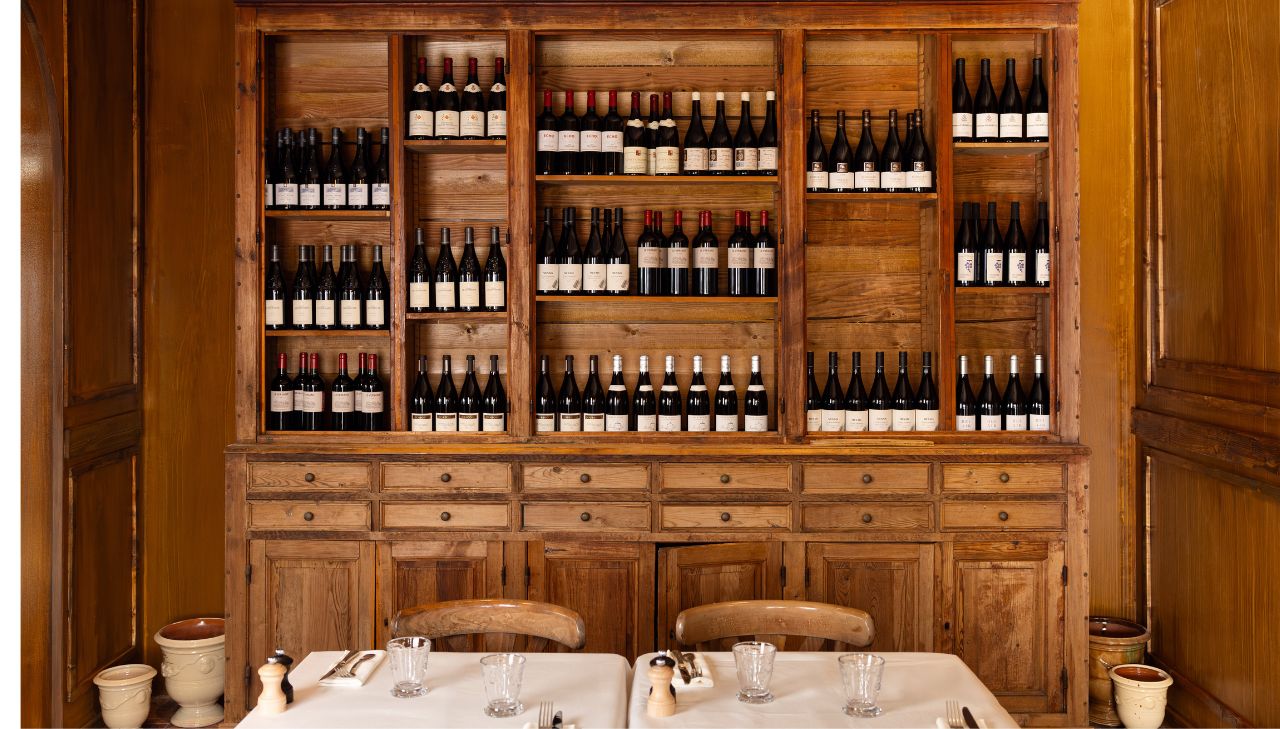
The name does the heavy lifting before you’ve sat down. Chez Margaux. It doesn’t say excessive. It doesn’t say concept. It says: Come, we will look after you. The wine is already open. The concept is beautiful: this is Mamie Margaux’s table – French gastronomy filtered through a grandmother who knew exactly what she was doing. Behind it, chef Michel Puech has earned Margaux its title of Meilleur Cordon Bleu de Paris 2026 by TTBON on the strength of something deceptively simple: fresh, seasonal and terroir-rooted cooking. Made entirely in-house, the menu is rooted in the French classics that most chefs have stopped bothering with.
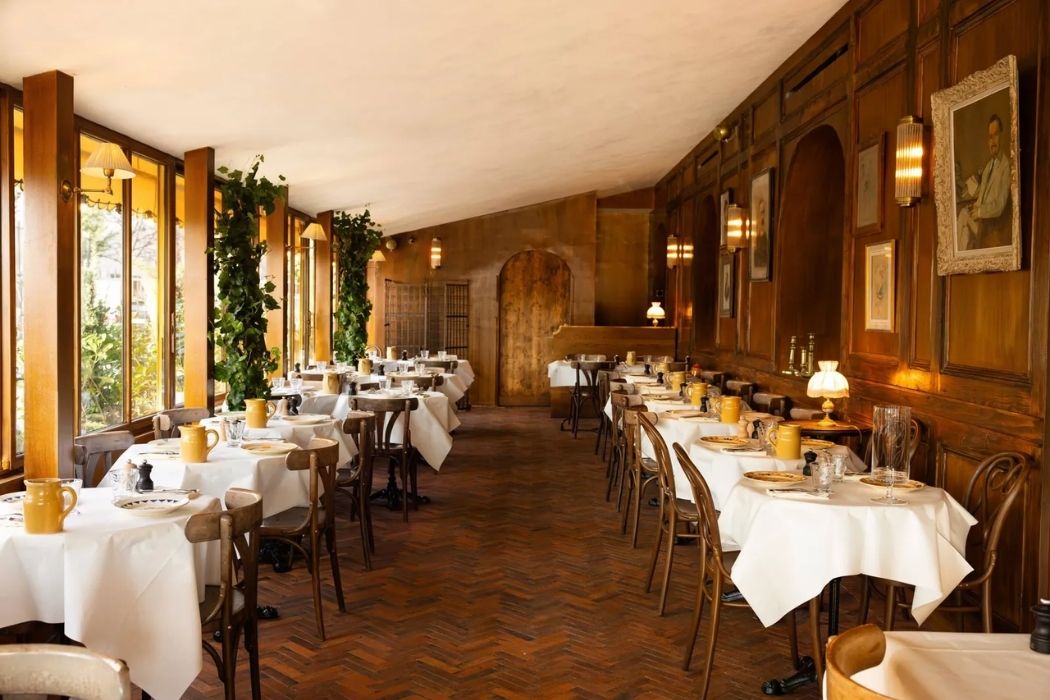
We are greeted politely at the hostess desk and walk to a round bistro table – the kind built for leaning in. The service from there on was warm and unhurried, friendly without performance. And though the room is full, it is calibrated: you can hear yourself talk, hear the person across from you better still.
To start, Champagne, naturally. A glass each while the room settles and the Eiffel Tower begins its evening routine – and when the light display ignites across the iron frame, the entire room pauses with it. Bread, generous. Butter, beautiful. Margaux trades the theatre of fine dining for something more charming: the sense that everything on the table simply belongs there. White linen, pressed but lived-in, and a brass candelabra still wearing the wax of the nights before it. The crockery has been thought about, too – none of it matches, and that’s the point: scalloped silver plates, cream dishes with hand-painted floral rims, a snail dish on its own lace doily, a little mustard-yellow jug.
To begin, my partner has the asperges blanches in a hollandaise, at once airy and rich, adorned with a scatter of roe. White asparagus is treated here as a seasonal sacrament – a lesson in produce-led cooking: leave a great ingredient alone, then do the one thing that makes it sing.
Across the table, the grenouilles sautéed in butter with garlic and persillade, golden at the edges, tender within. There is an art to frog legs: too timid, and they disappoint; too aggressive and the flesh turns to nothing. These were exactly right – garlic-forward without aggression, the parsley fresh enough to make itself known.
For the main: onglet – the cut that rewards those who know how to order it. Deeply flavourful, with a pleasingly assertive bite, it arrived with a sauce rich without ever tipping into excess.
Beside it, a bottle of the Sancerre AOC ‘Croix du Roy’ by Lucien Crochet, 2020. A red Sancerre is always a declaration – pinot noir from the Loire, mineral and cool-fruited. A backbone for the beef and delicate enough not to overwhelm the grenouilles.
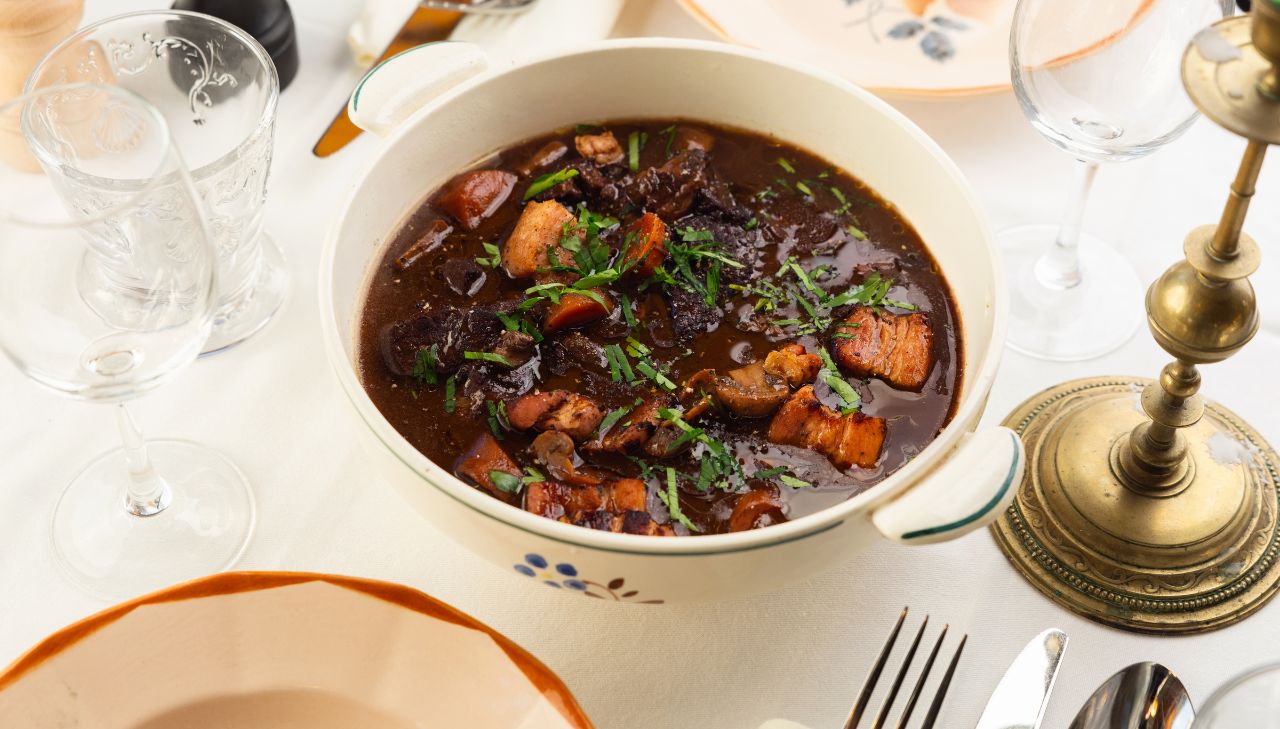
Opposite, the bœuf bourguignon arrived in its copper pot – braised to the point where the beef surrenders without embarrassment, the sauce mahogany and aromatic.
The choice of sides is deliberately simple: a purée de pommes de terre, silken and buttered; haricots verts, bright and simply dressed – at least something green made it to the table, for the sake of our health; and frites, crisp and golden, just as they should be. The perfect trio – each executed with confidence and echoing the ethos of Chef Puech’s signature style.
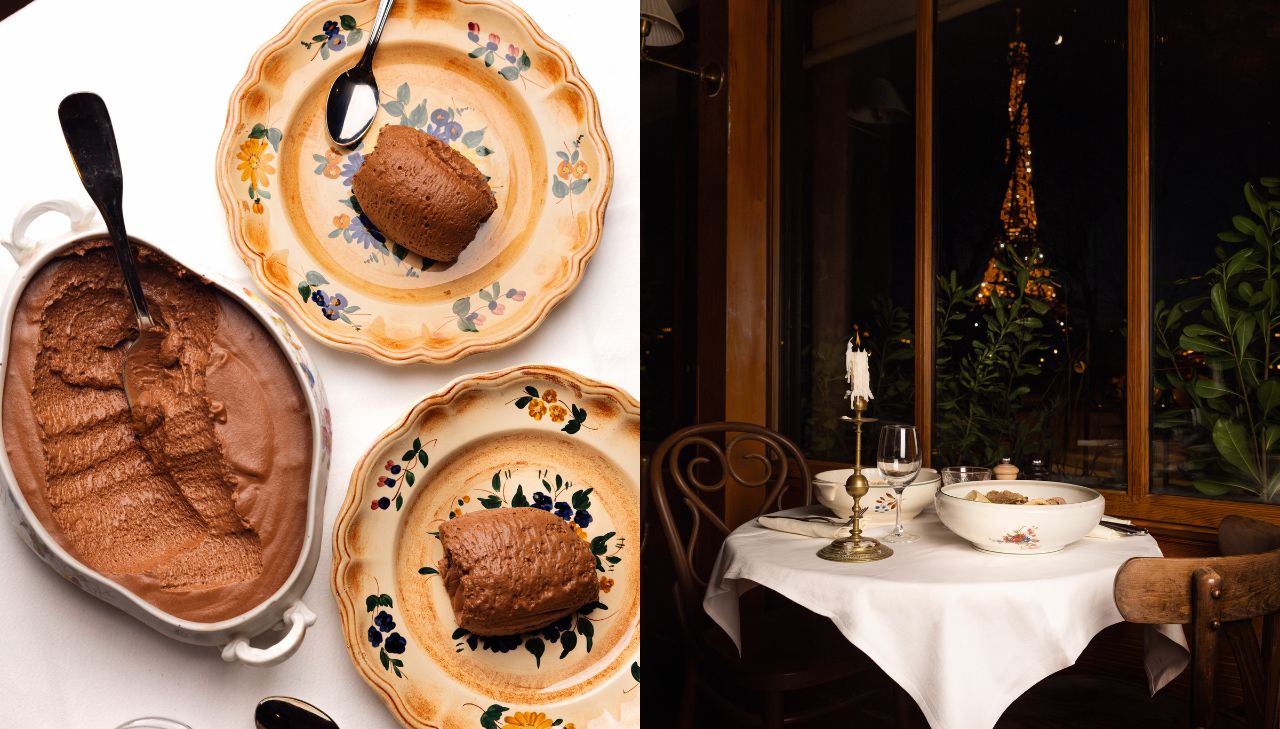
One does not order the mousse – one agrees to it. It arrives creamy and light, the kind of dessert that disappears too quickly and leaves you with a longing for just one more spoonful. But we were beaten, gloriously so; another bite was simply beyond us. And so we make our peace, trading that final mouthful for an ice-cold martini after dinner – less a compromise than a fitting, grown-up farewell to the meal.
All the while, the Eiffel Tower has been gazing over us – offering her delicate light show as the hours ticked. From a table at Margaux, it feels staged just for you – the kind of view that impresses your guest before you’ve even ordered.
But here is what distinguishes Margaux from restaurants that trade on the view: frankly, the food would be worth sitting down to anywhere. The location is the gift on top. Chef Puech has built something rarer than a good restaurant – a place with a genuine pleasure to host, the food and wine deeply rooted in terroir, and yet still committed to seasonality, served in a room that makes you want to stay long after the last spoon is set down. We left full, glowing and entirely won over. That it overlooks one of the most romantic vistas in the world is exactly the kind of excess Mamie Margaux would have approved of.