
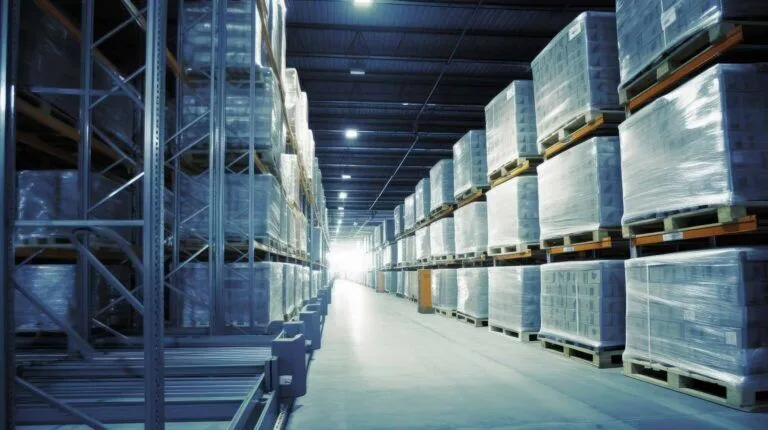
In the conversation around supply chain resilience, cold storage rarely receives the attention it deserves. Yet temperature controlled environments support a surprising amount of the United Kingdom’s high value economy, from small biotech studies in the Oxford Cambridge arc to decentralised tech clusters that rely on high density computing hardware kept within strict temperature thresholds. The real story is not just the equipment, but the layered ecosystem that surrounds it: local providers, specialist engineering consultancies, and global logistics companies that are quietly expanding capacity.
Investors who follow infrastructure adjacent sectors may find cold storage worth observing. Not because individuals are renting fridge trailers, but because the underlying demand pressures, biotech, data centre redundancy, regulated pharmaceuticals, climate resilient logistics, are growing in a steady and often quiet manner.
The sector can be understood in three stages, each revealing a different aspect of the market.
Stage 1, Grassroots Resilience, The Local Providers Building the Foundation
Cold storage resilience begins at ground level with the smaller, agile companies that support Britain’s operational backbone. These firms rarely appear in investment decks, yet they act as pressure valves for the wider supply chain. They provide controlled environments at short notice when a system fails or when a temperature dependent operation suddenly expands.
Their clients are no longer limited to caterers at outdoor events. More often they include:
- small research labs that need temporary freezer capacity
- boutique technology firms whose high density servers risk overheating during cooling plant upgrades
- food producers and agritech start ups trialling temperature sensitive processes
- local pharmaceutical distributors preparing for compliance audits
Within this practical and operational tier, services such as mobile cold storage for hire now function as important parts of the regional infrastructure. What once supported a marquee kitchen now assists biotech, technology and regulated businesses that need rapid access to controlled environments when continuity is at risk.
Companies such as Ice Cool Trailers form part of this grassroots network. They provide modular walk in units, freezer banks and mobile controlled environment rooms that can be deployed quickly with minimal disruption. For organisations that do not maintain spare cold capacity, which includes the majority, these providers represent the first line of resilience.
The grassroots stage is not glamorous, but it is reliable, recurring, and resistant to economic swings. Investors often value exactly those qualities.
Stage 2, Engineering and Consultancy, Where Service Creates Value
The next stage involves refrigeration engineers, monitoring specialists and consultancies that design, install, maintain and remotely manage cold storage environments. This is where the technical and service based revenue sits, and it often delivers higher margins.
Examples include:
- Star Refrigeration in the United Kingdom, one of the country’s largest independent industrial refrigeration groups, working with pharmaceuticals, cold chain logistics, food processing and industrial plant
- Cold Solutions Services, which offers temperature monitoring, logistics optimisation and compliance support for temperature sensitive operations
- facility management groups that now offer controlled environments as a service, combining installation, maintenance and digital monitoring
At this level, the financial profile becomes familiar to experienced investors. Recurring service revenue, outsourced facility management, monitoring data, compliance driven contracts and predictable maintenance cycles begin to dominate the economics.
Cold storage becomes less of an equipment rental activity and more of a long term technical infrastructure service supported by regular income. This is the stage where mid market private equity tends to enter before the broader market recognises the opportunity.
Stage 3, Global Cold Chain Platforms, The Quiet Institutional Play
The final stage includes the large international operators already attracting institutional capital. These companies integrate multi temperature warehouses, controlled environment distribution hubs and real time monitoring networks for pharmaceuticals, agritech and other high value goods.
Examples include:
- DP World, which operates large logistics hubs with multi temperature zones and active real time monitoring
- Lineage Logistics, a major global operator backed by significant institutional investors with an expanding footprint across Asia and the Middle East
- Maersk Cold Chain Logistics, which combines container level temperature control with inland controlled environment facilities
This is where the sector connects directly with global trade, food security, pharmaceutical transport, medical logistics and climate resilient distribution. It is also where the earliest signals of institutional involvement tend to appear.
Across all three stages, cold storage reflects several important investment themes:
- the growth of decentralised infrastructure, where small local providers underpin regional resilience
- compliance driven recurring revenue within biotechnology, pharmaceuticals and food grade sectors
- the digital transformation of physical assets through real time monitoring and predictive maintenance
- risk mitigation economics, where preventing temperature failure can protect millions in asset value
- the continued presence of privately owned and overlooked operators in a sector that is essential yet rarely public facing
Cold storage may not become a headline investment category, but it is a meaningful indicator of growth across biotechnology, regulated logistics, decentralised computing, agritech and temperature sensitive global trade.
For those who require practical cold storage today, specialist providers across the South of England offer dependable, quickly deployed and actively monitored environments, one of the few areas of infrastructure where responsiveness remains a genuine differentiator.