

Charting a course with The Moorings’ 403PC as both vessel and vantage point, this is a trip unbothered by timetables and defined by tides, as sometimes the most faithful travel companion is actually the wind itself. It’s a story of anchorages more than destinations, of shoreline rituals, sea-soaked afternoons and the kind of quiet only found offshore. Join Peter Robinson as he drops anchor in some of the BVI’s most storied bays, snorkels through kaleidoscopic reef tunnels, dines beneath palms at beachside kitchens and trades tales with fellow mariners over rum and reef-fresh lobster.
The outbound Virgin Atlantic flight from Heathrow to Miami was an almost surrealistically empty leg. I took a row of window seats and settled in for the switch-off. A few hours later, arriving at Miami International Airport felt like being thrust into a sprawling shopping mall, vast, chaotic, and surprisingly sparse on refined spaces for relaxation. For travelers accustomed to lounges and intimate airport bars, navigating Miami’s endless concourses can test even the most patient. Each year, approximately 50 million passengers pass through MIA, with over 400,000 flights taking off annually. Monorail anyone? While travelers to the BVI have options via Puerto Rico, St. Thomas, or Antigua, the direct Miami route was efficient for me, offering a manageable nine-hour, 30-minute flight, augmented by whatever I could charm from accommodating flight staff.
My stay in Miami was brief; just an overnight respite before continuing on to Beef Island. Energised by traveling again and a few residual in-flight G&Ts, I decided against a quiet evening at my airport hotel. Obviously.

Instead, a short cab ride to Miami’s vibrant nightlife led me to Balans, where I met Julian Sahut. Julien is a distinguished sommelier with over a decade of experience in the wine and hospitality industry, and has garnered acclaim for his expertise and contributions to the field. As Head of Wine at Sexy Fish in both London and Miami, he oversees an impressive collection of over 1,000 wines and approximately 230 Champagnes. For those fortunate enough to find themselves with an evening to spare in Miami, a visit to Sexy Fish and a conversation with Julian is indispensable. I’m reliably informed the food, though perhaps overshadowed by the wine selection, is similarly spectacular.
Feeling a little dazed the following morning, I returned to Miami Airport for the three-hour flight into Terrance B. Lettsome Airport bound for The Moorings base on Tortola.
The Moorings’ premier base lies in Road Town, Tortola, a 15-minute scenic drive from the airport. Founded by Navy veteran Charlie Cary and his wife Ginny in 1969, The Moorings offers bespoke sailing experiences across more than 20 stunning destinations worldwide. The company was built based on a genuine passion for sailing and upstanding customer service. In 2024, the company announced a significant investment of over $100 million to acquire 160 new yachts, expanding their fleet to 750 premium vessels. This expansion includes a partnership with Dufour for 50 monohulls and the addition of 110 catamarans from Robertson & Caine, enhancing the variety and quality of their offerings. Additionally, The Moorings has introduced power charters in Dubrovnik aboard the Moorings 403PC, providing guests with new avenues to explore the Adriatic Sea.

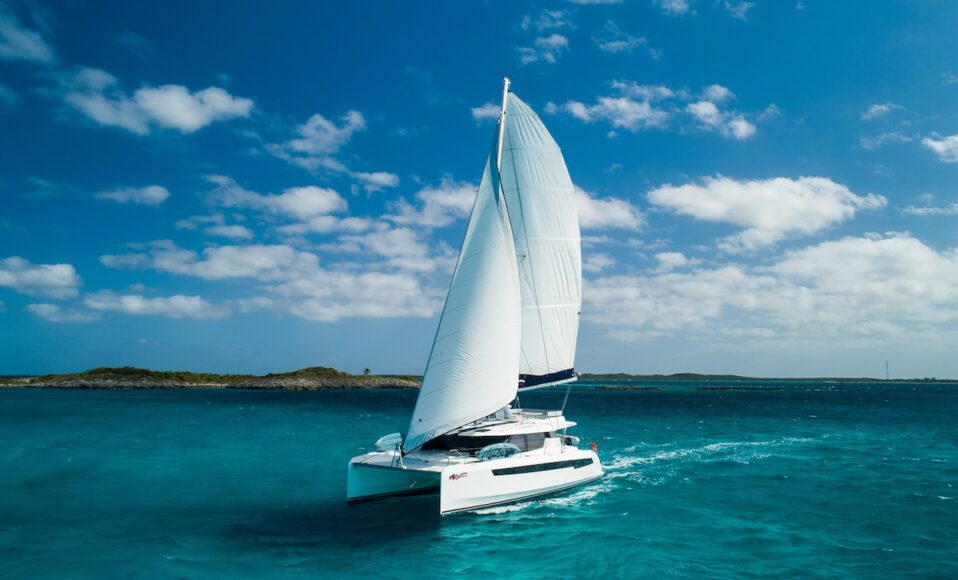
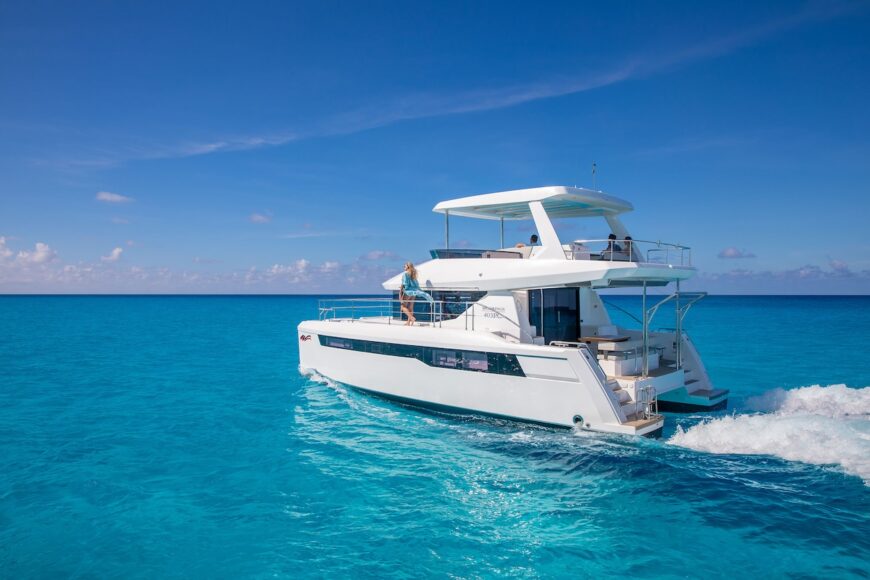
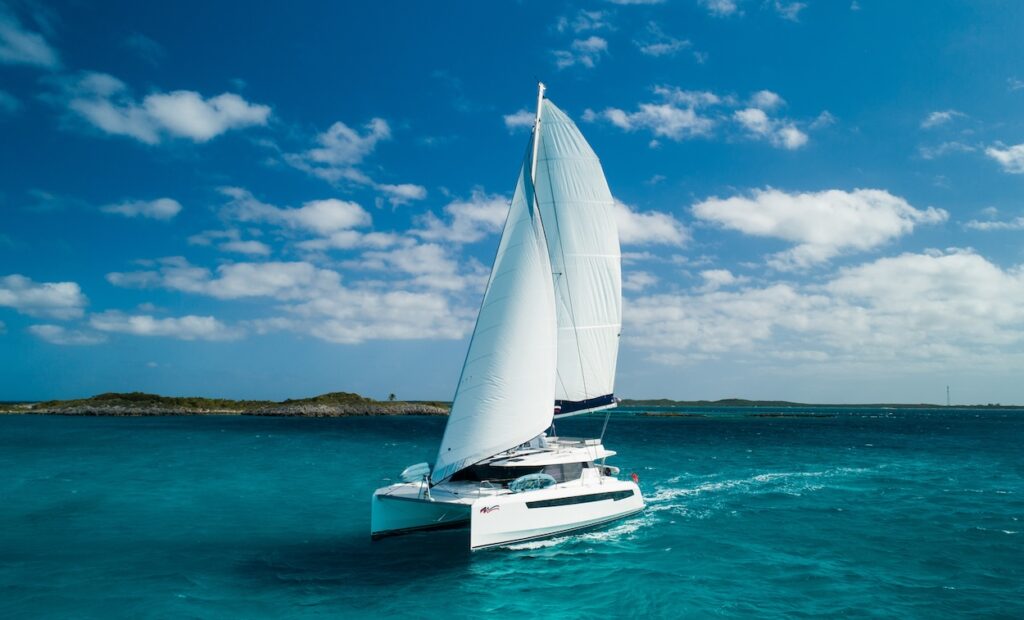
Our vessel was indeed a 403 PC Cat. Sleeping six comfortably in three luxurious cabins, this dual-hulled beauty offered exceptional stability—a blessing during occasional Caribbean squalls. Multihulls, with their expansive beam and twin hull design, are especially appealing for those new to sailing, minimizing the motion experienced in rougher seas. I am just as happy sleeping in a hammock on deck, truth be told.
It’s entirely up to you whether you opt for a bareboat charter or take a slightly larger vessel and add a live-on skipper and chef. Our skipper Shem joined us at the marina to take us through the safety briefing and discuss the all-important provisions run as we opted to don our chef’s whites aboard.
In my opinion, part of the experience of sailing or motoring is picking up provisions from port to port. The onsite Moorings Market has everything you might need, from fresh fruit to high-grade rum. If you’re early enough and send your shopping list in advance, they can also arrange a delivery for you, like any marina. After a thorough safety briefing and provisioning run, we set out from the marina around sunset. Cocktails flowed as we made a leisurely passage southeast of Colison Point, off Virgin Gorda, dropping anchor just as the sky painted itself in shades of pink and gold.
The evening concluded at CocoMaya, nestled idyllically south of Fichers Cove Beach. Its palm-fringed setting, glowing fires, ocean vistas, and the soothing sounds of the Caribbean surf provided a more than satisfying backdrop. Portions were notably generous; their menu features a variety of Asian and Latin fusion dishes served family-style, encouraging sharing. The restaurant also offers private beach dinners with chef’s tasting menus, which your skipper will be happy to book in advance.
The best part of living aboard is that, when you’ve finished dinner, you can retire to your yacht and continue into the evening, bound for a late finish. All that remained was to argue over control of the boat’s Bluetooth till the small hours, uninterrupted beneath starlit skies.
After morning coffee we set sail for the eastern end of Virgin Gorda and The Bitter End Yacht Club whilst desperately trying to get the Grand National on BBC World Service. ‘The Bitter End‘, established in the 1960s by the Hokin family, is nestled within a sheltered bay renowned for its remarkable natural beauty and biodiversity. Local lore claims that the bay earned its evocative name due to sailors reaching this serene refuge as their ultimate ‘bitter end,’ exhausted from their voyages, yet captivated enough never to leave. The location maintains its legendary allure, regularly hosting international sailing legends and adventurous celebrities seeking solitude and inspiration.
Directly in front of the resort, approximately 70 mooring balls are available, with 15 or so that can be pre-booked by contacting the resort directly. The remainder operate on a first-come, first-served basis. As you navigate through North Sound with its steep, lush hillsides, you’ll spot the marina masts in the distance.
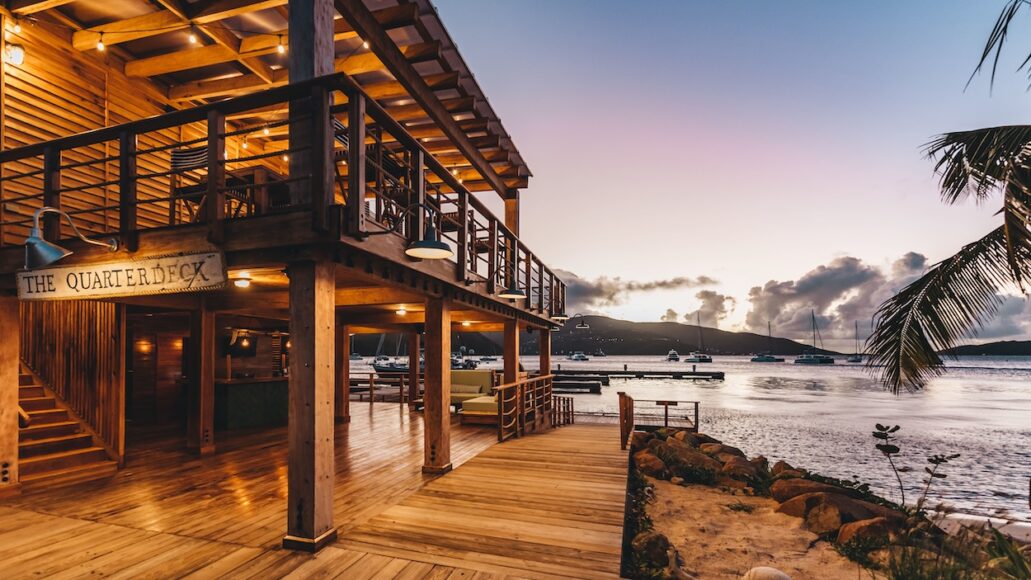
The market is a convenient stop for provisions, and you can find fresh produce grown locally at the resort. The Quarter Deck has everything you need, from catering to casual snacks to fine dining. We settled in for lunch on their beachfront deck, ordered cocktails and took in the panoramic views. Try the fresh ceviche, grilled mahi-mahi tacos, and their signature lobster salad.
The Bitter End once again returns as the perfect place to stop before heading off to Anegada, as the North Sound offers a good angle for sailing in the Northeast trade wind.
We inevitably ended up browsing their gift shop for essentials, like yet another dry bag to add to the ever-growing collection no one seems to remember to pack. The afternoon on the beach was spent in hammocks and laying out on the sand before returning to the boat to moor for the night off Prickly Pear Island. As we all watched the sun come down from the top deck, transfixed on the horizon, we knew there was no leaving the boat tonight. My last memory was watching a lively group on the shore a few hundred metres away light a bonfire and what seemed to be worshipping coconuts (Wilson?).
In the mornings, when the deck was finally quiet and calm, I would sit and look out across the bay, coffee in hand. Watching the Windsurf foiling guys cutting through the water so silently, whilst the Frigates fished for breakfast, were stolen moments of peace. I couldn’t help but wonder what reckless abandonment had taken place on the beach the night before. So I decided to take a morning dip and swim to shore. Little remnants of the party remained, tightly positioned logs around a sizeable open fire (and no rubbish in sight because, thankfully, some people get it). After taking in the view from the shallows and exploring as far as one can barefoot, it was time for breakfast. Except for a few rather fetching-looking coconuts, the beach seemed entirely deserted. I took one as a prize and swam it back to the boat in search of rum.
Having made landfall at Guana Island later that afternoon, we savored our modest maritime bounty of coconut mixed generously with Mount Gay rum. Cooking aboard any yacht is either a communal effort or one you can happily delegate to a chef. Each port offers distinct local flavors, the usual American suspects and the occasional unexpected delicacy. Sailing in these waters is always a nuanced game, intricately dependent on shifting weather and seas. Earlier that morning, passing the famous Baths, the beach was sadly off-limits due to choppy conditions. Ever adaptable, we heeded Captain Shem’s advice, deciding instead to anchor in calmer waters off White Bay for leisurely afternoon cocktails, comforted by the knowledge that flexibility is a luxury unto itself in these islands.
One of the true luxuries of yacht charter for me is the flexibility it affords, especially when it comes to dining. While Marina Cay Bar and Grill was our initial plan and had been privately hired, we gracefully pivoted to Marché At Trellis, indulging in sushi, tacos, and a decent bottle of wine. As the wind strengthened and the beach lanterns began their dramatic dance—reminiscent of a scene straight out of ‘Sleeping With the Enemy’—we appreciated the unique advantage of yachting. With dinner conveniently boxed, we left the rather empty restaurant and shifted the dining venue from shore to deck, a testament to the unmatched spontaneity and ease of travel by sea.
The following day, after collecting supplies at Trellis Bay Market, we set our sights on Jost Van Dyke, one of the most beloved yet still delightfully untamed islands in the BVI. Named after the legendary Dutch pirate reputedly active in the area, Jost Van Dyke offers a rugged charm and storied past. White Bay, known for its famously lively beach parties, acts as a magnetic hub where revellers arrive by boat to enjoy its renowned bars like the legendary Soggy Dollar. It’s known for creating the Painkiller, I am told. Yet, as quickly as these crowds gather, they disperse by evening, leaving behind only a handful of moored yachts and visitors in the island’s serene, scattered residences. Our group arrived as the sun set, opting to embrace the tranquillity unique to yacht travel. We relaxed onboard, taking in the spectacular panoramic views of St John and Tortola, leisurely cooking dinner, and quietly contemplating the spectacle of daylight fading gracefully into night. Indeed, each traveller defines serenity differently, and this quiet, reflective evening proved to be ours.
In the cold light of day I could take in the actual majesty of our surroundings. The cove was fringed in the whitest white sand, enveloped in a neon bath of warm Caribbean water. I was told that the eastern beach was far less crowded, as it is lined with only a villa or two as well as Ivan’s – a beachfront budget hotel. The western side is the main attraction, though the sand on both parts is equally silken. Preferring to keep my morning calm, I opted to swim to shore, dry bag filled, in search of lunch. It turns out Ivan’s Stress Free Bar serves a top-shelf Jerk Chicken Mango wrap and a cold beer. It also had low occupancy, which was my speed for this trip.
As golden hour once again delivered its light show, we arrived at Cane Garden Bay. Nestled along Tortola’s lush northern coast, it’s a crescent of sand that has, over the years, played host to calypso kings, barefoot poets, and mariners chasing one last rum. With the golden hour gone, we swam ashore, dry bag in hand. I am positive captain Shem thought we were all mad. We drifted between Myett’s Garden & Grille—with live music wafting through the palms—and the open-air terrace of Paradise Club Lounge, where DJs were warming up for various club nights.
Despite its festive reputation, the bay’s rhythm felt muted at first—just a few locals and early arrivals sipping Caribs. We flagged a cab and cut across the island on Shem’s suggestion, arriving at a tucked-away Marina bar. Somewhere between the second and third venue, we paused along the roadside to take in the sound of a local high school marching band rehearsing. It was the kind of unfiltered moment that reminds you there’s more to these islands than their beaches—some kind of daily life beneath the hedonism.
The following morning, we charted a short hop to Sandy Spit, a pinprick of sand and palms just off Little Jost Van Dyke. Known to some as “Corona Island” (thanks to its appearance in a string of beer commercials), it’s the sort of place that looks as if it’s been photoshopped into existence—almost too perfect to be real. The shallows are deceptive, so while you can dinghy in with care, swimming ashore is far more entertaining. We did just that, beers in hand, wading through crystalline water to toast the morning on our own private dot of paradise.
Further along the eastern edge of Jost Van Dyke lies the Bubbly Pool, a curious geological quirk where waves from the Atlantic surge through a narrow rock channel, churning a natural basin into a cascade of seawater. You reach it by mooring off Diamond Cay and making the short trek from Foxy’s Taboo, the more elusive sister venue to the infamous Foxy’s in Great Harbour. The latter, of course, is home to the legendary New Year’s Eve bash—an annual bacchanalia that draws sailors from every corner of the globe. But even outside party season, the Bubbly Pool delivers a proper punctuation mark on a day of island wandering: remote, unruly and always rather affirming.
Dinner reservations secured at Pirates Bight, we navigated toward Norman Island’s sheltered anchorage known simply as The Bight. This crescent of calm water is a magnet for sailors, and no stop here is complete without a detour to the Willy T. Short for William Thornton, this floating schooner bar has achieved near-mythical status among the nautical set. Named after the architect of the U.S. Capitol Jost Van Dyke, the vessel has long since traded architectural drawings for cannonballs of rum punch and groups diving from its upper deck.
Aboard the Willy T, the energy is part theatre, part tradition—crew and captains mingle with curious tourists, music pulses from the speakers, and brave souls hurl themselves into the overcast sea below. Beyond its daily carnival of cannonballs and cocktails, the Willy T plays host to some of the BVI’s more colourful calendar fixtures. The Virgin’s Cup, held each October, is a spirited regatta in honour of the territory’s legendary women sailors. This is followed closely by the Interline Regatta, when airline crews from around the world descend on the islands for a week of sailing and shoreline revelry. Later in the season, competitive fishing tournaments turn this floating institution into a dockside clubhouse, where tall tales are swapped over cracked conches and one-too-many Painkillers. We exchanged pleasantries (and Painkillers) with a lively crew from New Jersey before making our way to the more composed tables of Pirates Bight, where fresh seafood and an open-air terrace awaited. The contrast, like everything in the BVI, was perfectly pitched.
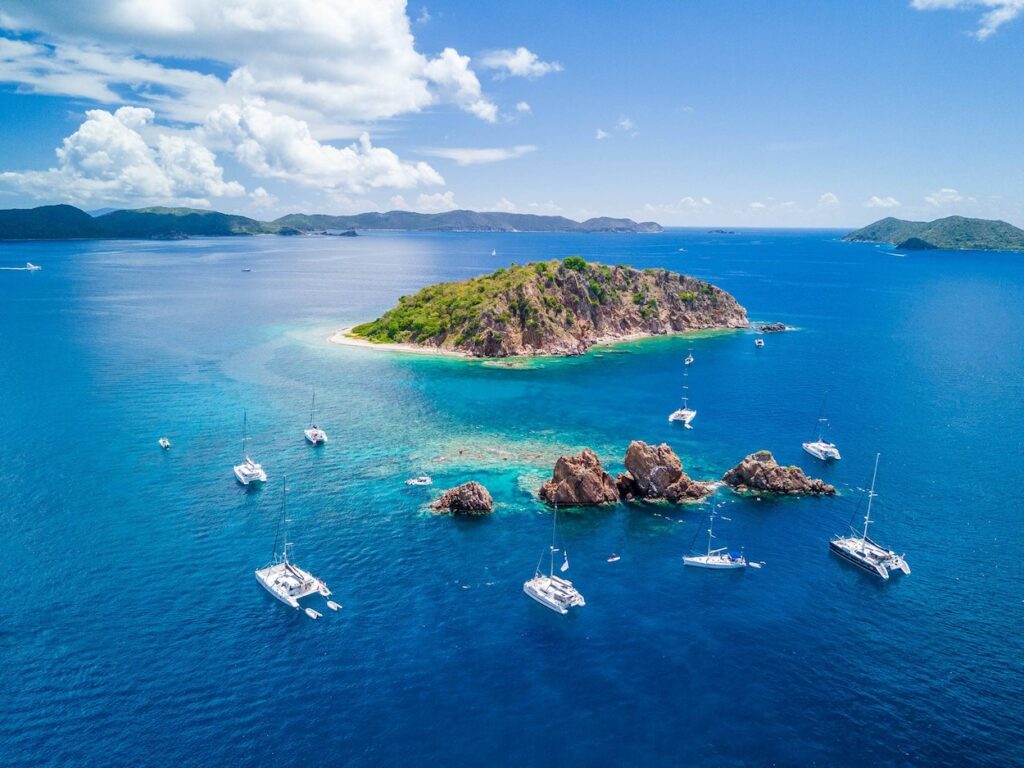
The Bight is a well-trodden waypoint for seasoned sailors, offering over 100 mooring balls that hug the dramatic coastline of Norman Island. This 610-acre privately held isle—rugged, uninhabited, and flush with folklore—is ringed by hidden coves, hiking trails, and crystalline waters that make it a magnet for divers. Just offshore, The Caves and The Indians rank among the most celebrated snorkel and SCUBA sites in the Caribbean, with plunging rock formations and coral tunnels teeming with technicolour marine life.
Norman Island’s literary fame as the muse for Robert Louis Stevenson’s Treasure Island is well-earned; its topography, riddled with secluded bays and pirate lore, lends itself to the imagination. But the historical reality is no less compelling—the island has long been rumoured to have sheltered privateers and hidden Spanish doubloons. Today, however, its treasures are culinary. Pirates Bight, the island’s singular restaurant, offers open-air dining framed by a sweep of white sand. The conch fritters come crisp and golden, the day’s catch is reliably fresh, and if the breeze turns favourable, the terrace transforms into a lively dance floor. The American contingent seldom misses a beat.
Another early start, fins in hand, we set out toward The Caves—an iconic snorkel site carved into the western edge of Norman Island’s anchorage. Hemmed in by steep limestone cliffs, these partially submerged grottoes offer a cinematic backdrop to an underwater theatre of colour. Vibrant coral fans and soft sponges sway along the cave walls, while reef-dwelling species like sergeant majors, parrotfish and yellowtail snapper dart through shafts of sunlight that pierce the blue. It’s a site as inviting to first-time snorkelers as it is rewarding for those who know where to look.
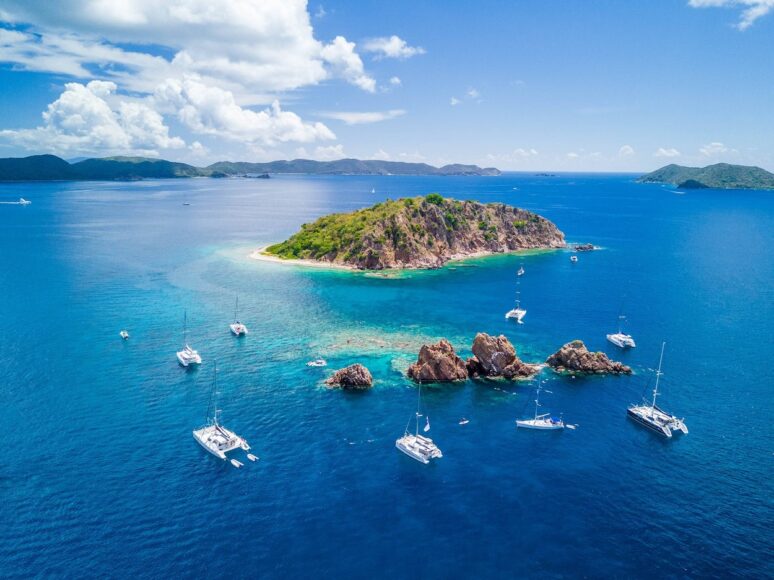
For those drawn to deeper immersion, a short dinghy ride leads to the dramatic formations at Pelican Island, known locally as The Indians. Rising jagged from the sea, their silhouette evokes a feathered headdress, hence the name. Below the surface lies a technicolour maze: coral bommies, sea fans and a maze of swim-throughs teeming with blue tang, spotted trunkfish, wrasse, angelfish and flatworms clinging like delicate origami to the rock faces. The northeast side, fondly referred to as the “fish bowl,” is especially dazzling, but be warned: this exposed site is outside the protection of Norman’s inner waters, and the currents can sweep through with surprising vigour, rewarding those who plan their entry with care.
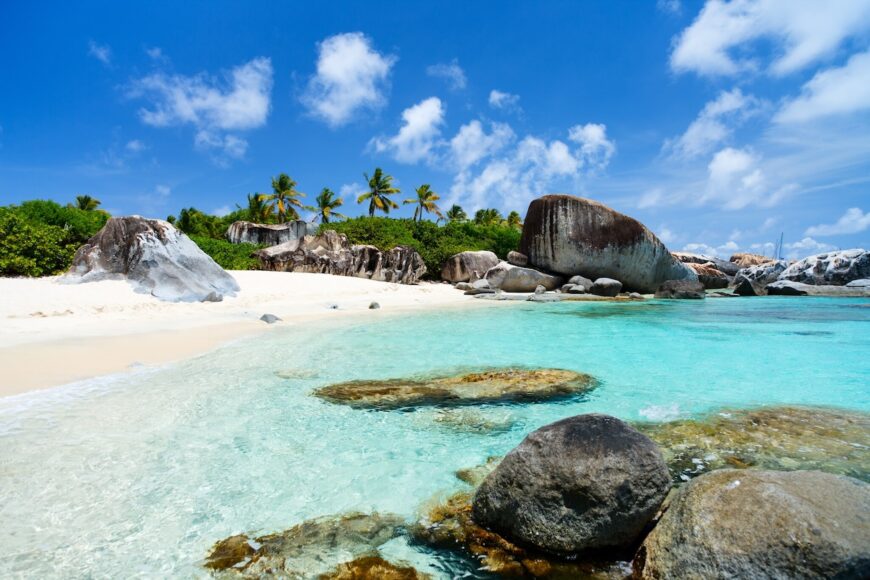
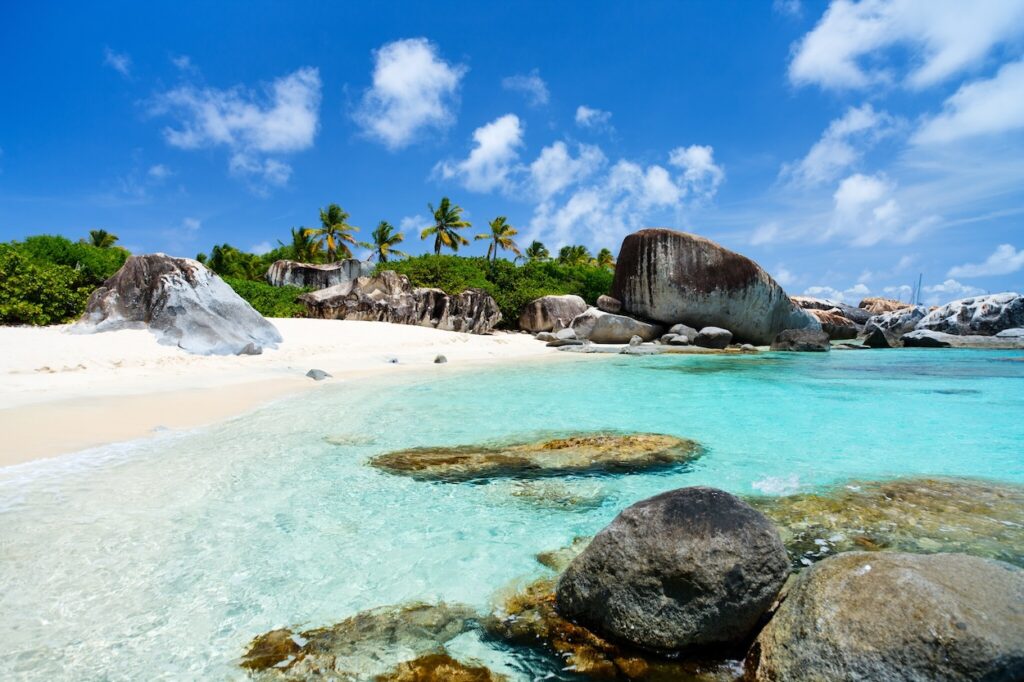
No voyage through the BVI would feel complete without a visit to The Baths—a geological marvel that manages, even through its fame, to deliver a sense of discovery. Perched on the southwestern tip of Virgin Gorda, The Baths is a sprawling natural sculpture garden where house-sized granite boulders rest like sleeping giants on sugar-soft sand. If you arrive early, and with the right captain, the place rewards you with an eerie stillness as though the island itself is pausing to exhale.
These cathedral-like formations are the result of ancient volcanic activity—molten rock that cooled slowly beneath the surface, hardened into crystalline granite, and eventually broke into the hulking, rounded shapes we see today as softer volcanic layers eroded around them. The formations stretch southward toward Devil’s Bay, linked by a winding route of ladders, ropes, and shallow pools that invite you to climb, wade your way through their crevices.
You’ll find similar formations scattered at Fallen and Broken Jerusalem nearby, but The Baths holds the crown—part geological history lesson, part elaborate dreamlike playground. Arrive by water, swim in with a dry bag slung across your shoulders, and for a moment, forget the world beyond the boulders exists at all.
Dinghies must tie off at the floating dock line to protect the delicate seabed; from there, it’s a short swim to shore, dry bag slung over your shoulder like some amphibious courier. The designated swim line creates a buffer between moored vessels and the beach, adding a measure of calm to your landfall. On our arrival, however, the scene was uncanny in its emptiness. Aside from one American couple surveying the boulders, we had the entire place to ourselves. Even Captain Shem, not one to dramatise, was caught off guard by the absence of foot traffic. It felt, in that rare and fleeting moment, as though we had reached a peak.
Our final destination was a decent motor northeast to Anegada, the BVI’s anomaly—low, flat, and utterly otherworldly compared to its volcanic siblings. Rising a mere 28 feet above sea level at its highest point, this limestone and coral atoll feels less like part of the Caribbean and more like a mirage. It’s a place where the horizon blurs and the reef-strewn shallows flicker in every hue of turquoise imaginable. Encircling Anegada is an underwater world worthy of its isolation: a labyrinth of reefs, submerged caves, and wreck-strewn seafloor that tempts divers and snorkelers alike. Among the usual suspects—needlefish and parrotfish—you might also encounter bonefish, stingrays or the iridescent flash of a juvenile reef shark weaving between the shadows. Anegada may be geographically unassuming, but beneath the surface, it tells a story few islands can match.
As this was our last evening in the BVI and the weather was starting to look a little inclement, we decided to stay aboard till supper and watch the last flashes of pink start to fade across the sky.
Potters by the Sea is the sort of salt-stained outpost where bare feet and war stories are more appropriate than dress codes and wine pairings. Like many of the BVI’s shoreline haunts, it caters to the sailing faithful—those who drop anchor not just for a meal, but for the ritual of it. Lobsters are plucked straight from the shallows and slapped onto torchwood grills, their shells hissing as the scent of char and brine fills the air. The drinks list is sparse and unpretentious; the options are white or red. This isn’t a place for linen napkins or tasting menus; it’s a shoreline canteen at the edge of the map, where time slows, conversation stretches, and the sea is always within reach.
Chartering with The Moorings proved to be an effortlessly orchestrated entry into the rhythm of the British Virgin Islands. From the setup at their flagship base in Tortola to the confidence-inspiring presence of Captain Shem, the logistics faded into the background leaving only the joy of the journey. Our 403PC catamaran was faultlessly appointed, intuitive to crew, and stable across changing seas, making each anchorage feel like a private estate with a rotating view. From anchoring beneath the golden hush off Virgin Gorda, to sipping Painkillers aboard the infamous Willy T, the trip unfolded organically. We dove The Indians, navigated the cathedral boulders of The Baths, and capped it all with grilled lobster under torchlight on the surreal flats of Anegada.
Each stop offered its own vignette—part castaway fantasy, part mariner folklore. The voyage stitched itself together with sails, salt, and the sublime art of drifting just far enough off course. In the end, the only itinerary worth following was the wind.