

Chalet Harmony. The Discreet Architectural Anchor in Méribel’s Premier Enclave.
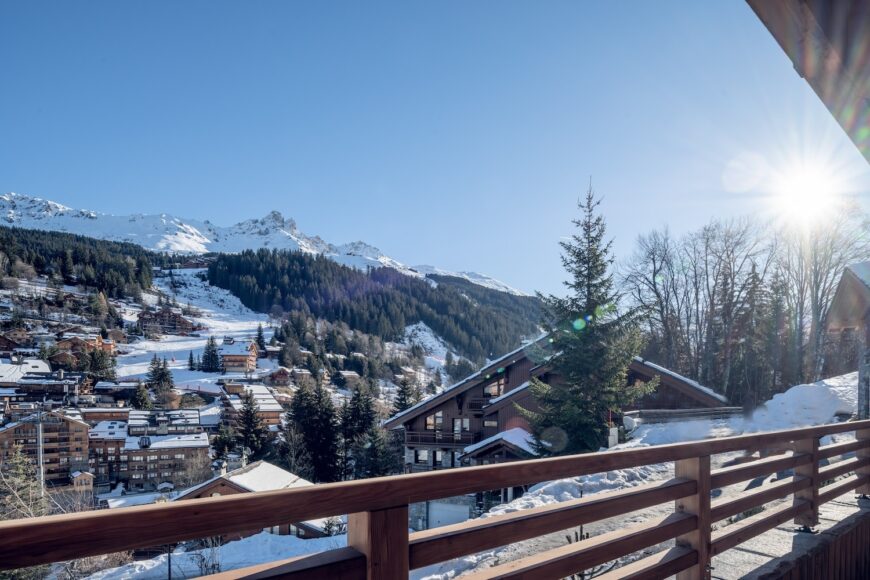
In Méribel’s Dou du Pont enclave, Chalet Harmony emerges, for me, as a sophisticated four-story architectural anchor. It’s a property designed for those who understand the nuances of mountain logistics, value spatial intelligence over square footage alone and require their environment to facilitate both grand-scale conviviality and assured seclusion.
Bienvenue à Méribel.
For experienced skiers, specifically alpinists who measure winters in decades rather than seasons and maintain an interest in how humanity’s impact on the mountains evolves, Méribel tends to reappear at particular moments. When efficiency matters. When access matters. When skiing, rather than performance, is the point. And increasingly, when privacy and understatement have become more appealing than display. I think it’s into this context that Chalet Harmony and Purple Ski arrive with aplomb.
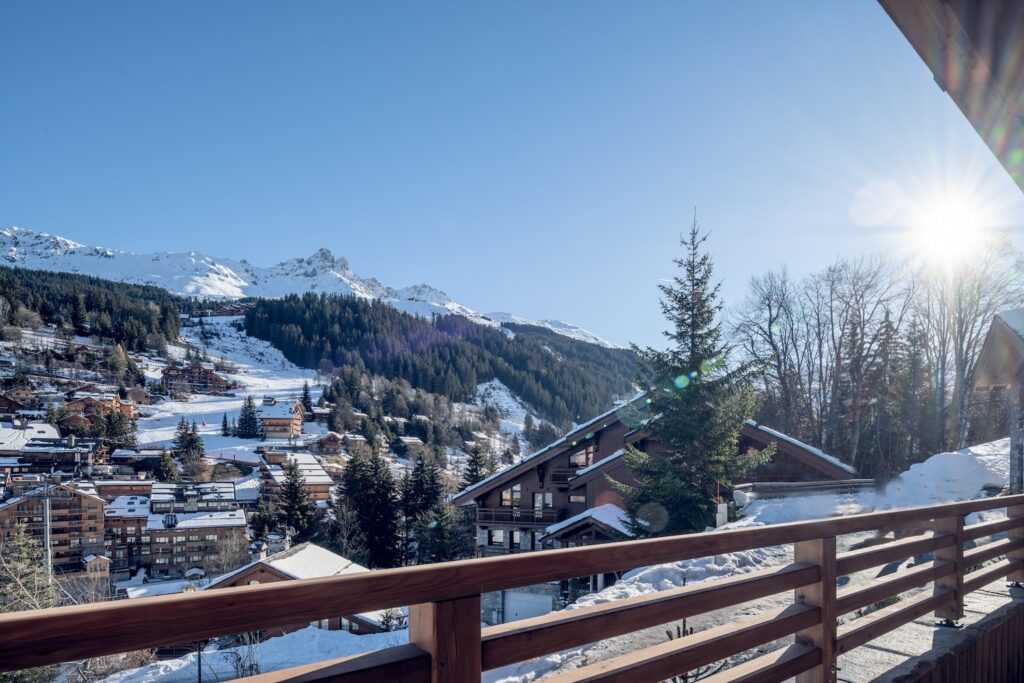
Nestled in the alpine cradle of the Tarentaise Valley, the story of Méribel is not one of accidental discovery. Its character stems from a founding doctrine laid down in the 1930s by Colonel Peter Lindsay, a man determined to craft a resort in harmony with, rather than in dominance over, the majestic landscape. Disenchanted with the urban developments he witnessed elsewhere, Lindsay enacted a strict, enduring building code. This ensured the use of local slate, wood, and stone, with signature double-pitched roofs. This was not mere aesthetics; it was an ethical and firm stance on place.
The first structure, Chalet-Hotel Le Doron, established the template: a consistent architectural language that continues to define Méribel’s discreet, integrated charm. The pioneering spirit that built the resort was as distinctive as its architecture. Lindsay’s vision attracted a consortium of builders, affluent English families, astute businessmen, and local Savoyards, all united by a shared belief in this new Alpine ideal. Such was the conviction that, when funds were scarce, Lindsay would compensate with plots of land. One notable beneficiary, Marie Blanche, accepted the offer, constructing a hotel that operated for over eight decades. A testament to the venture’s foundational solidity, if it was ever needed.

By the mid-1950s, Lindsay’s considered alpine creation had materialised into a thriving yet intimate community: some 40 chalets, 17 hotels, and a nascent lift system, including the pioneering Burgin-Saulire gondola. Its appeal was evident, attracting a clientele who valued understatement. Early owners included figures like Brigitte Bardot, the Duchess of Bedford, and a brother of François Mitterrand. Entertainment was correspondingly refined; a single nightclub, the legendary Shangri-La (known today as O’Sullivans), sufficed. This was not a resort of ostentation, but one of assured taste. A philosophy etched into its very stones and enduring in its atmosphere.
Lindsay very much respected landscape over ego, and so Méribel was conceived as something more considered than its contemporaries. Chalets rather than concrete, timber rather than spectacle. That founding philosophy still lingers. This respect for the natural terrain extends beyond architecture to the very way one engages with the mountain. Méribel’s true scale is unlocked off the manicured pistes. A morning spent with the guides from Parallel Lines, a local outfit revered for its deep mountain knowledge, recalibrates your understanding of the resort. This was underscored one afternoon when, after the champagne-fueled spectacle of La Folie Douce, the transition to the serene, untouched snowfields felt like moving between two distinct worlds. It was a reminder that for all its civilised charm, the wilderness here is immediate, and access to it, through the right hands, is the resort’s supreme luxury. While neighbouring resorts have evolved into a theatre of extremes, Méribel has retained a certain tonal discipline. It knows what it is, and just as importantly, what it is not.
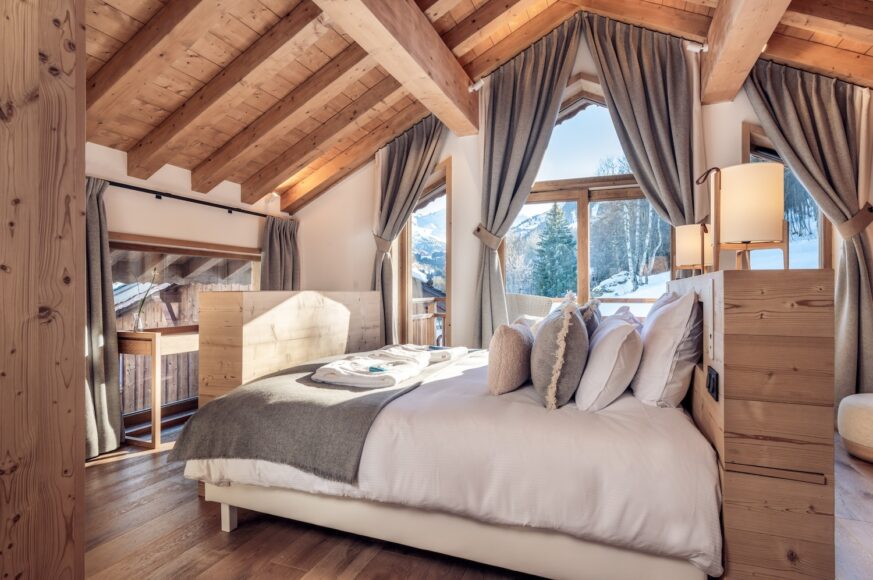
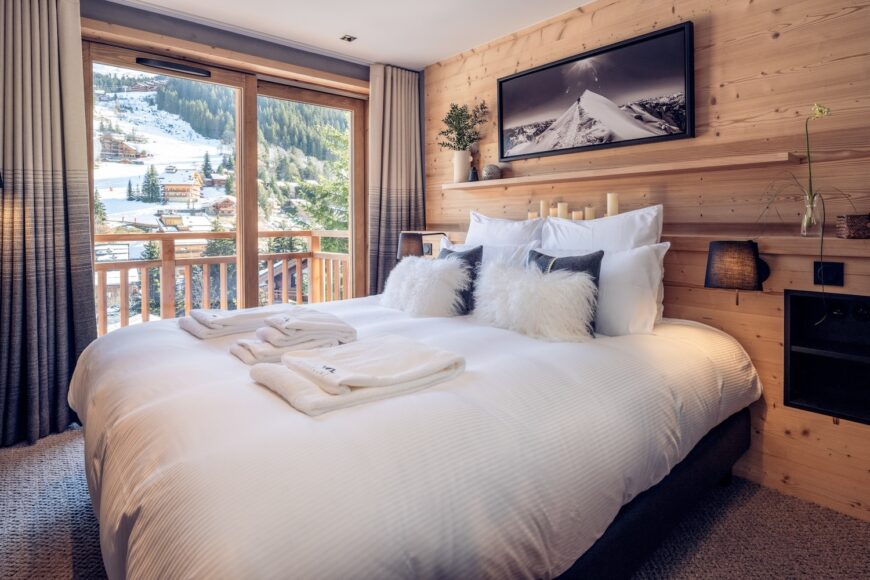
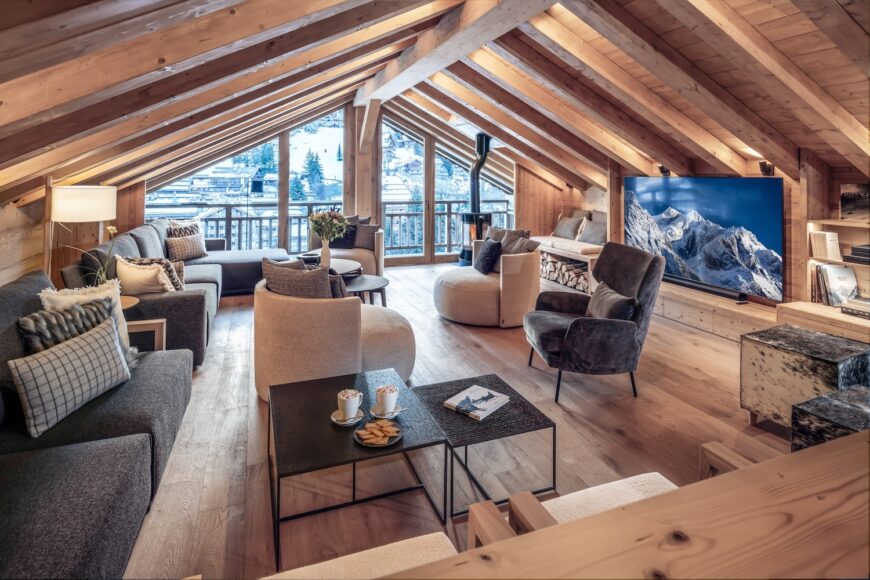
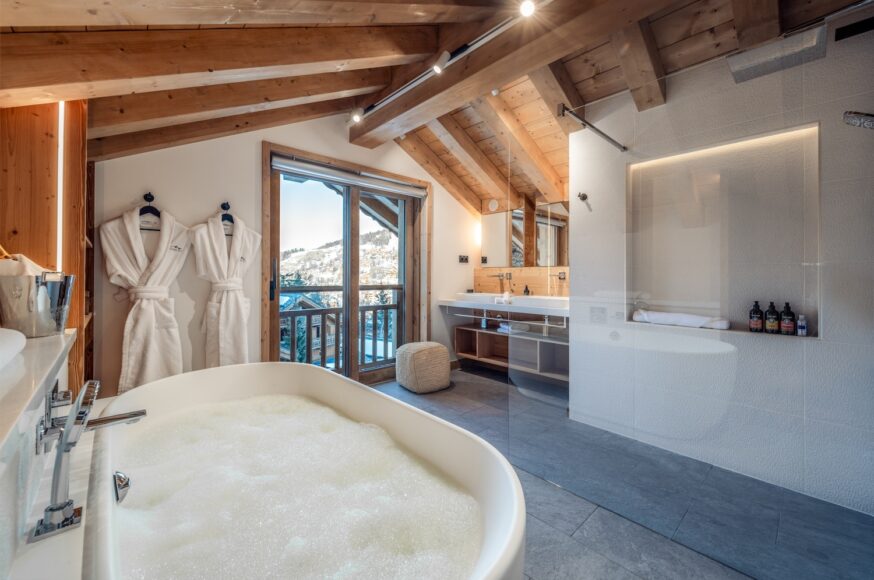
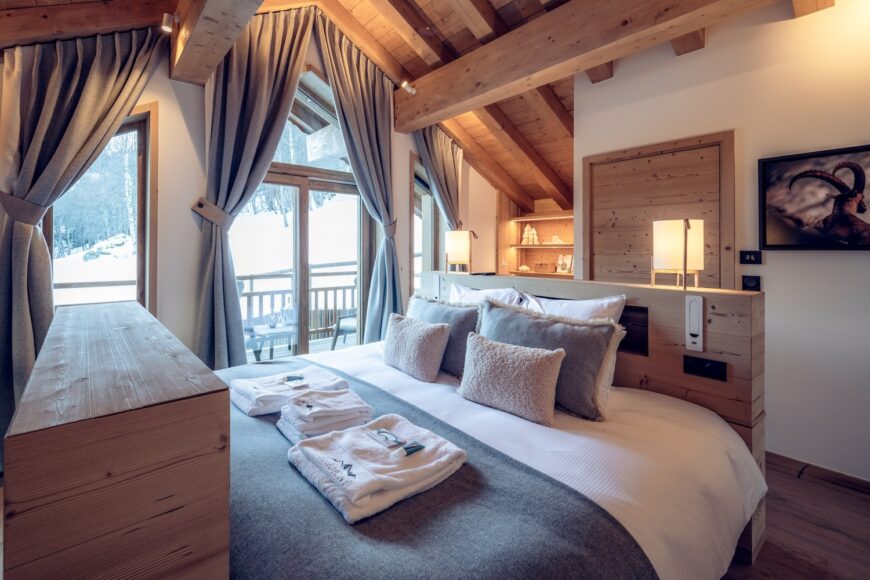
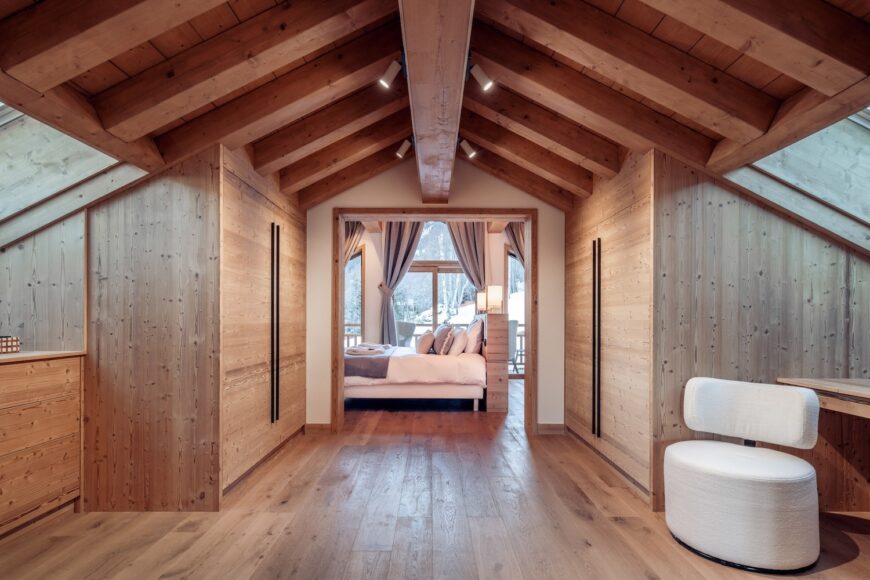
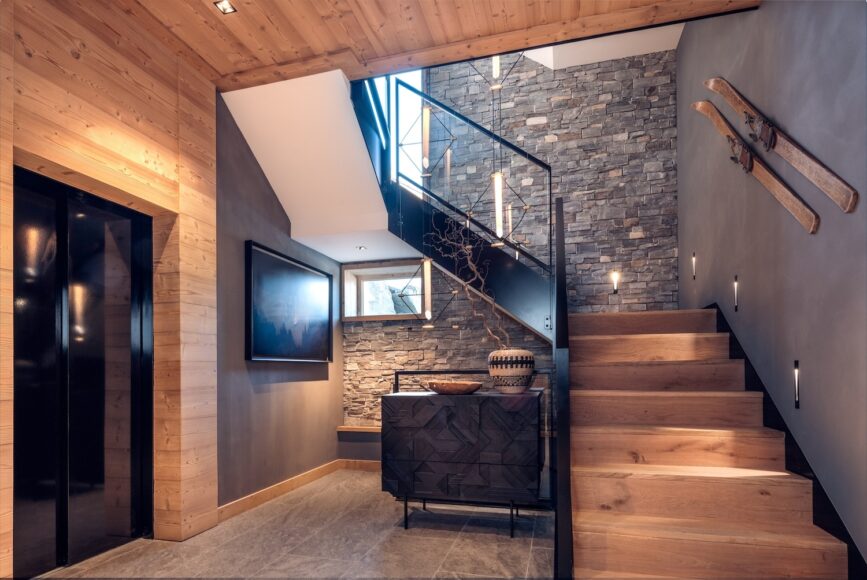
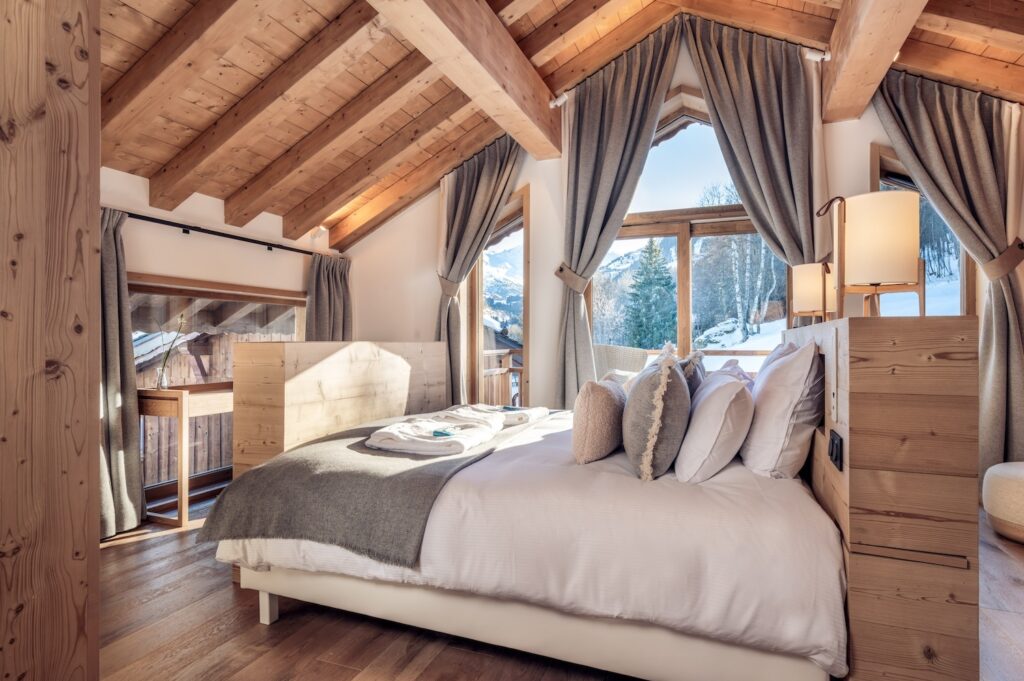
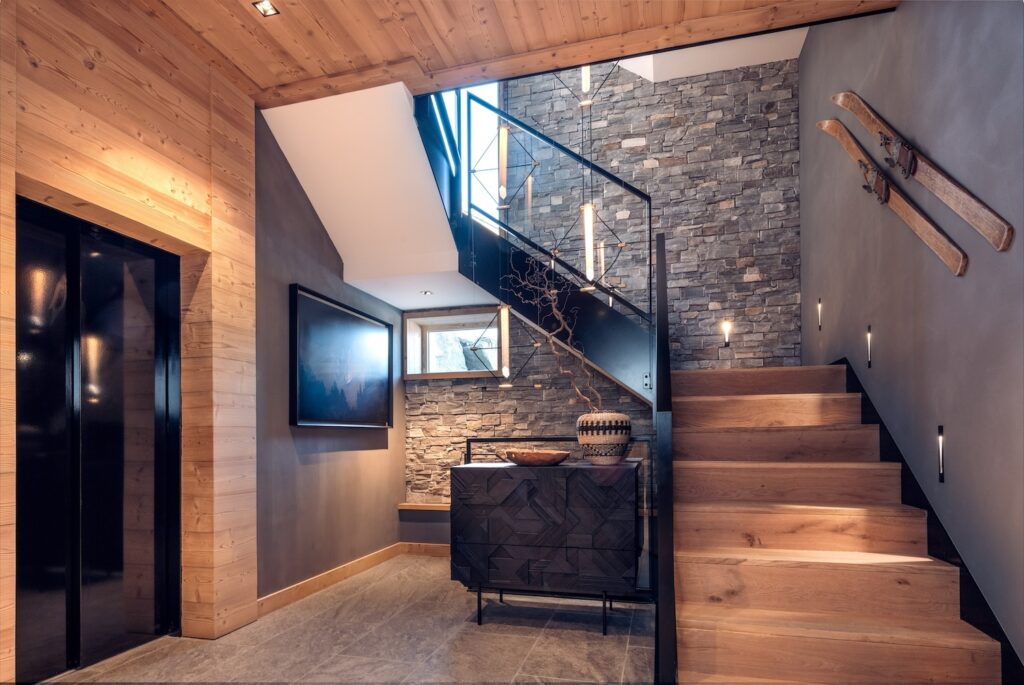
For me, the true measure of a property lies not in its list of amenities, but in its ability to execute a flawless, discreet, and intuitively responsive experience. From its pre-construction conception, the property was designed to be a “modern interpretation of traditional Savoyard style,” but this undersells the clear architectural rigour. The 625-square-meter structure is an exercise in harnessing the alpine environment. The expansive use of glass is not merely aesthetic; it orchestrates a constant, dynamic engagement with the landscape. Neutral, textural interiors, local stone, aged wood, and considered linens act as a calm counterpoint to the dramatic exterior, ensuring the views remain the protagonist in the love story. This is a chalet built with an understanding that its primary luxury is not gold-leaf finish, but immersive space and unimpeded perspective.
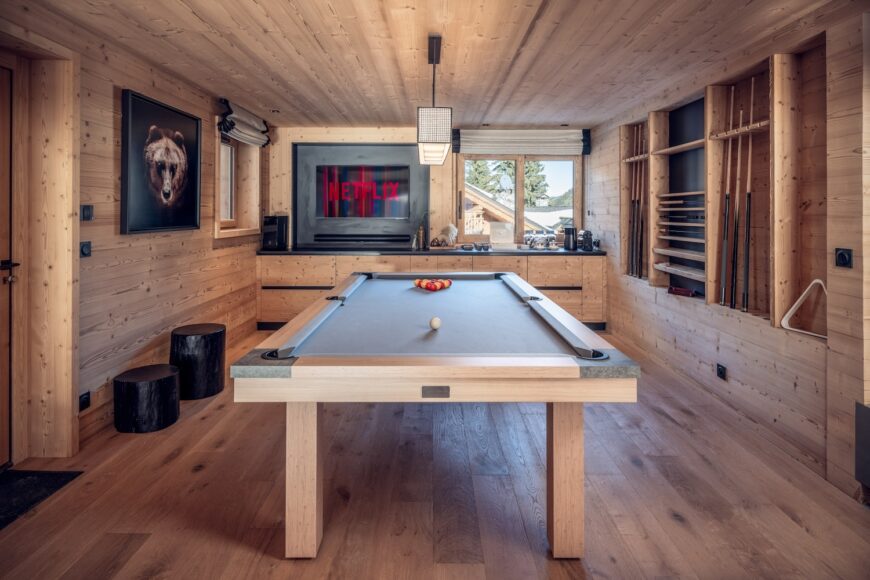
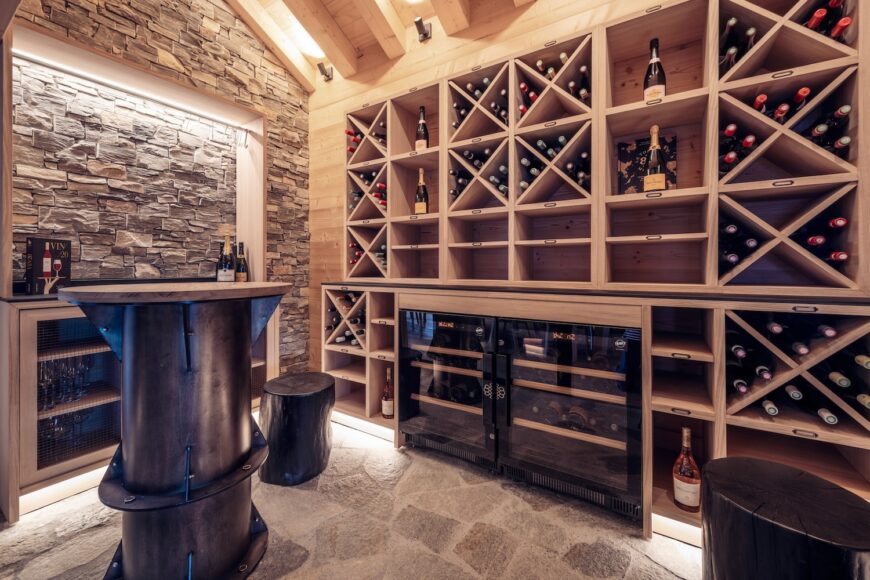
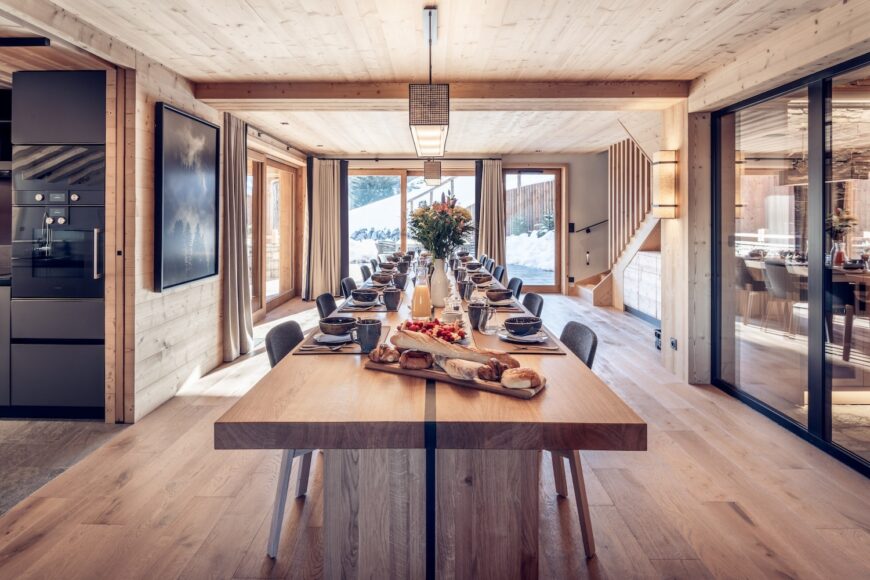
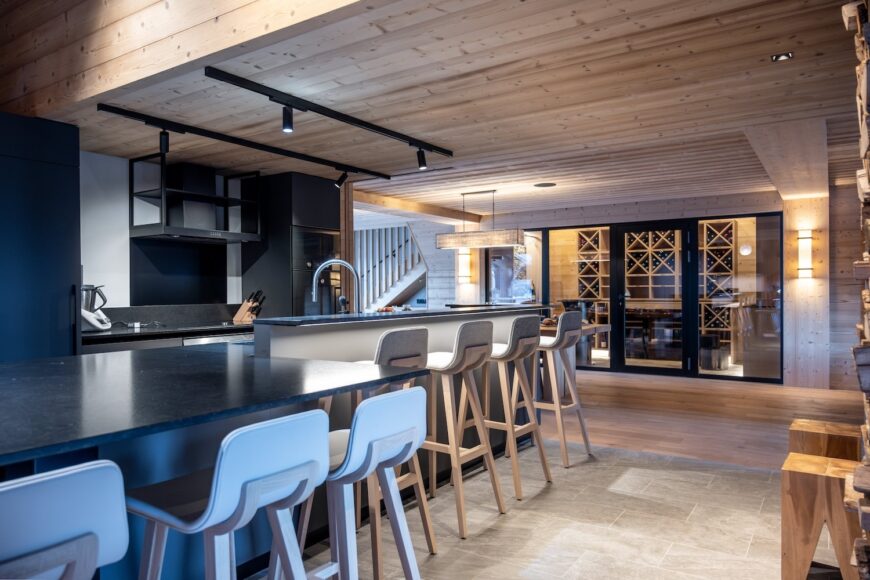
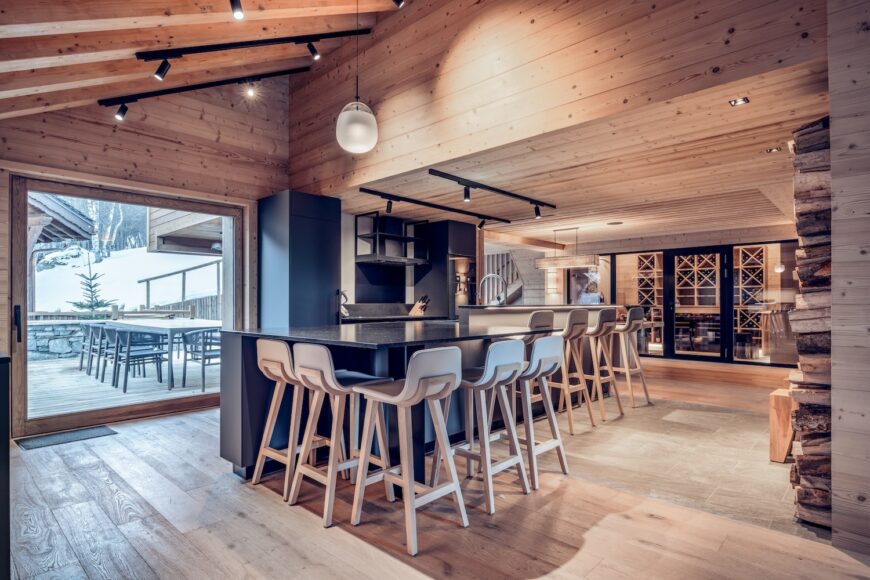
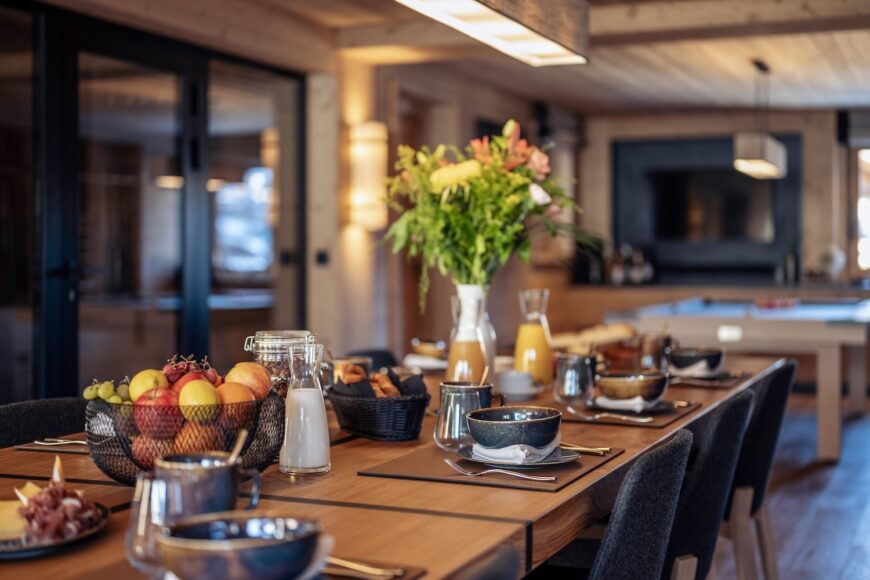
The layout also demonstrates a sophisticated understanding of group dynamics. The decision to allocate an entire floor to the master suite is a statement of priority, creating a rare sanctuary within a shared residence. More impressive is the fluid, interconnected design of the principal living floor. Here, the dining and lounge areas flow into one another, anchored by a central fireplace, wine cellar and billiards area, all surrounded by deep terraces. This is not one cavernous room, but a sequence of interconnected yet defined spaces. It allows one part of a group to debate over a game of pool, another to linger over dessert at the 14-seater table, and others to retire with a book by the fire. All simultaneously, without congestion or cacophony. The design orchestrates coexistence without compromise, acknowledging that the luxury for 14 is the ability to choose separate approaches to an evening within a shared domain. It facilitates both grand-scale entertaining and intimate retreat, a balance often missed.
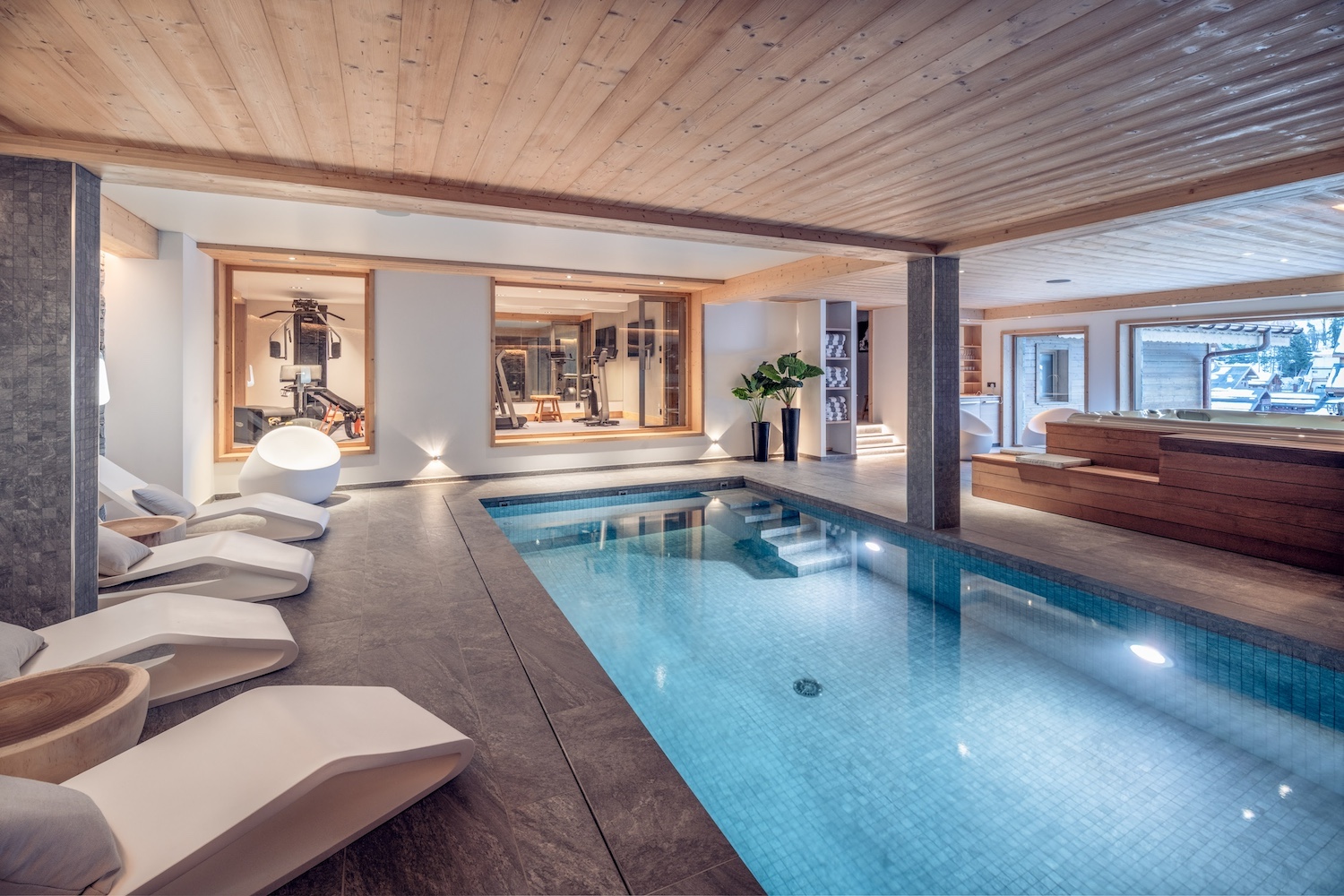
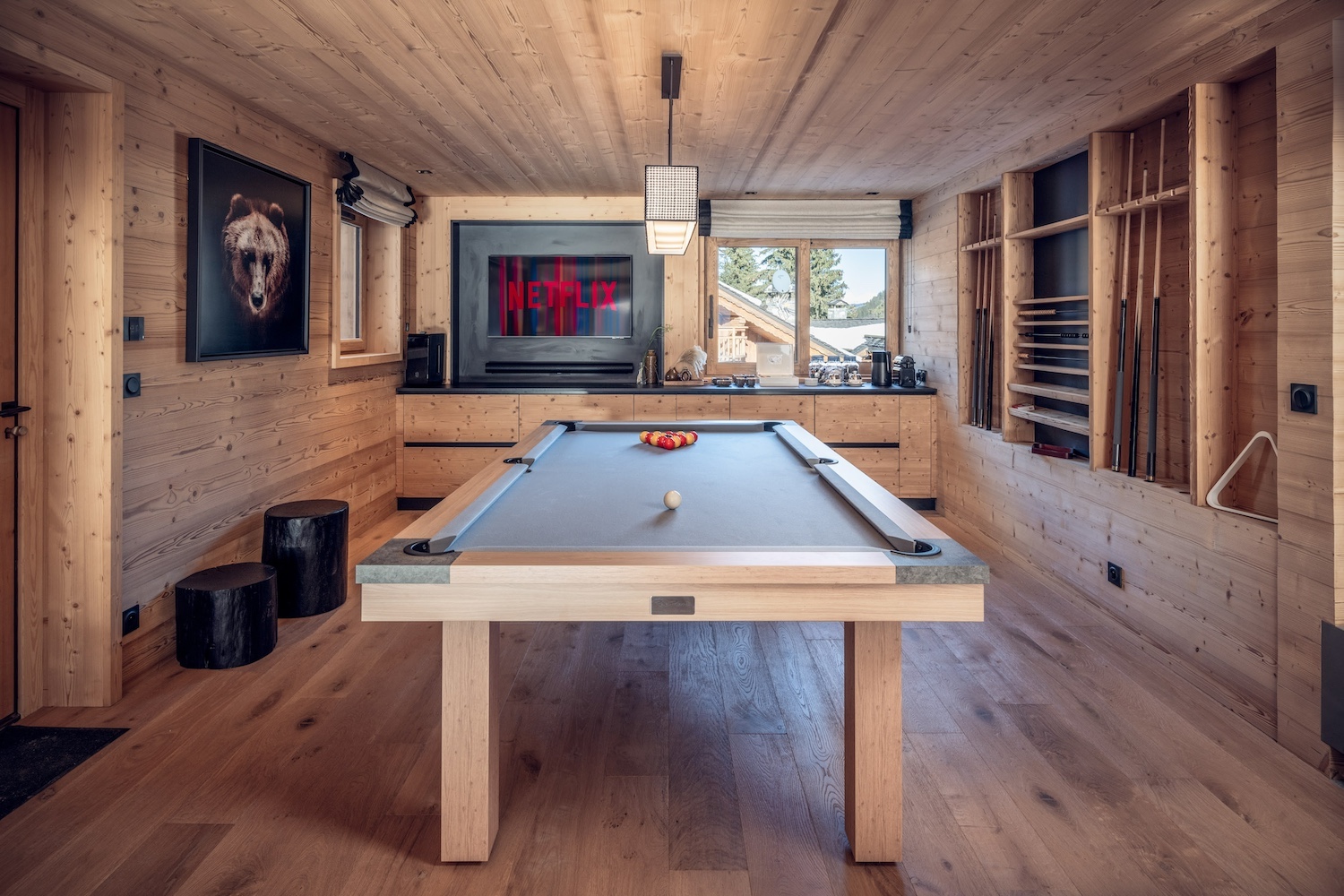
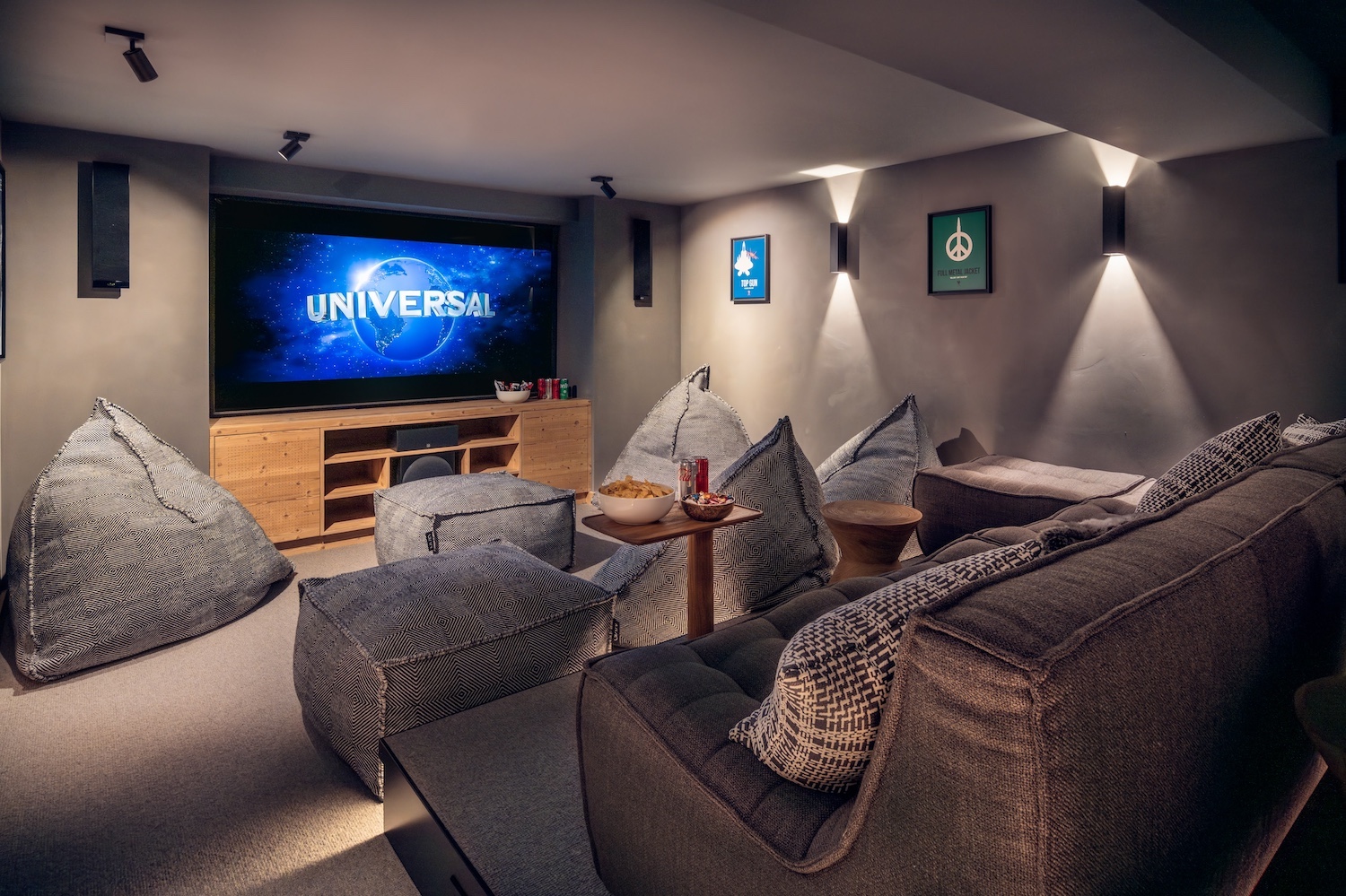
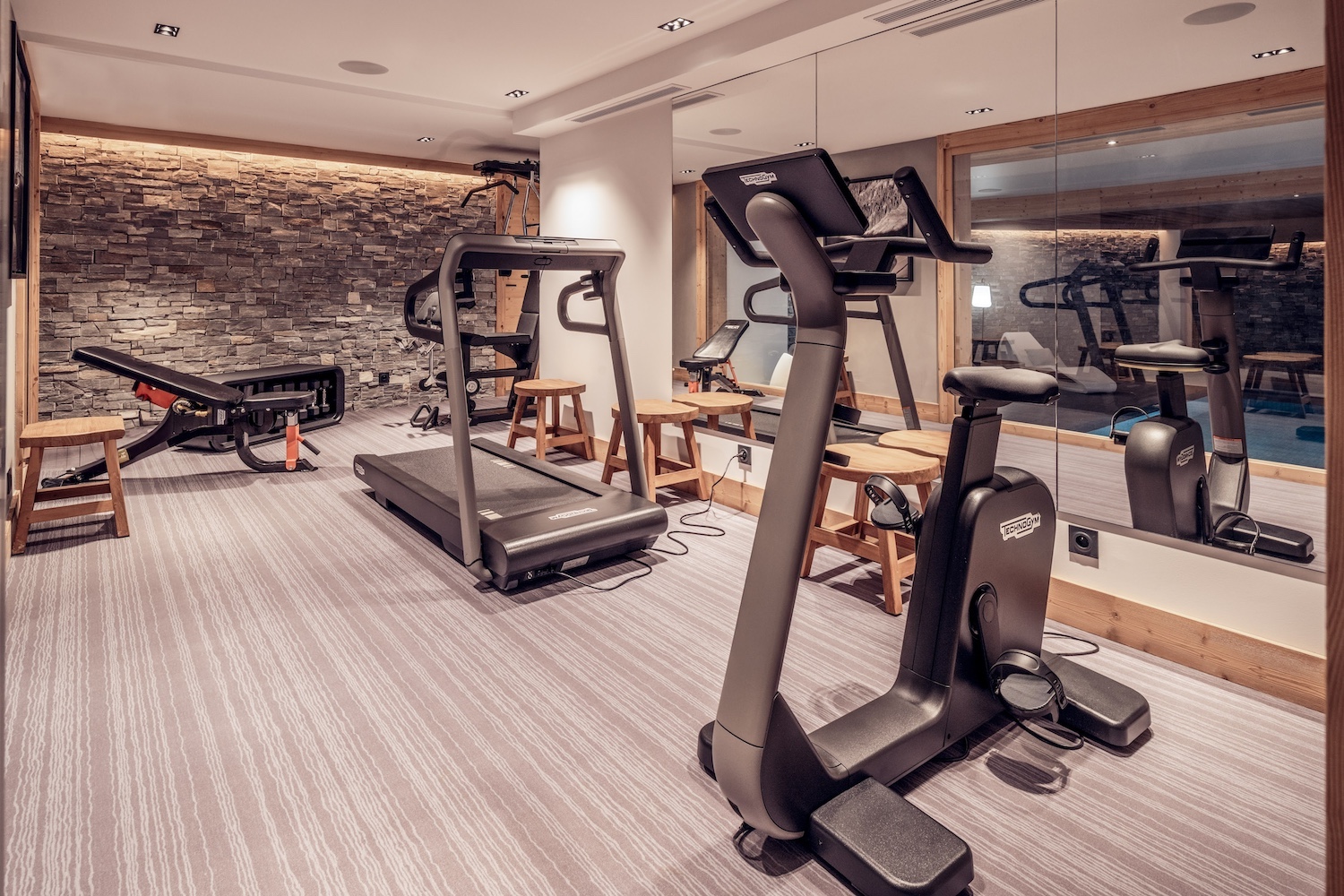
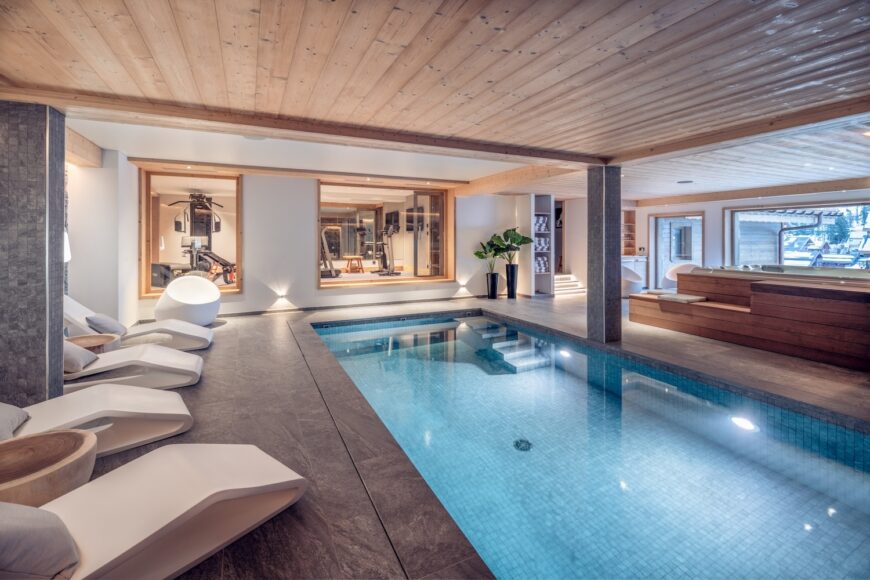
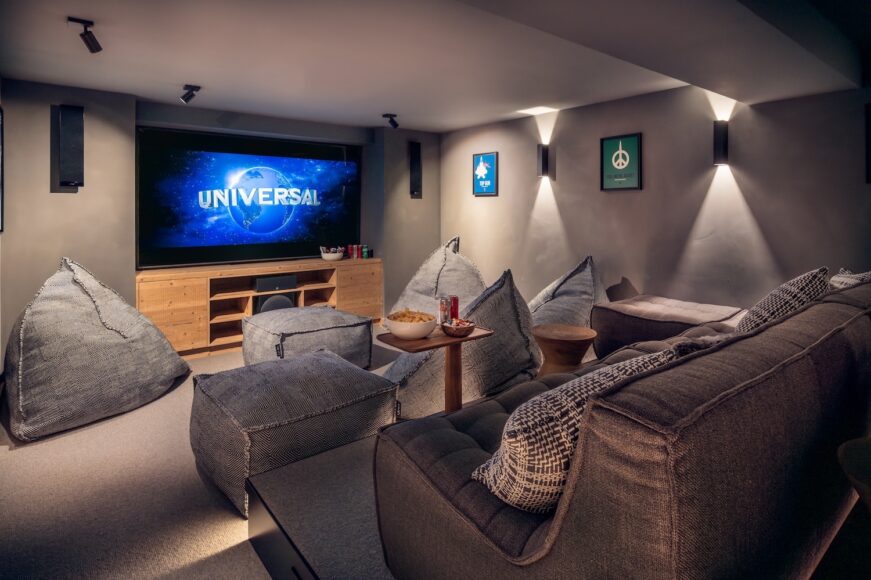
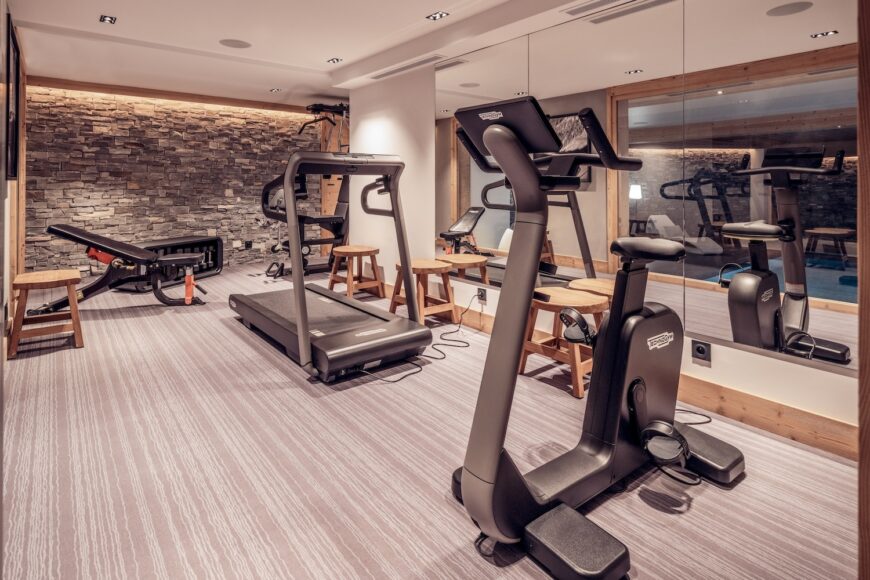
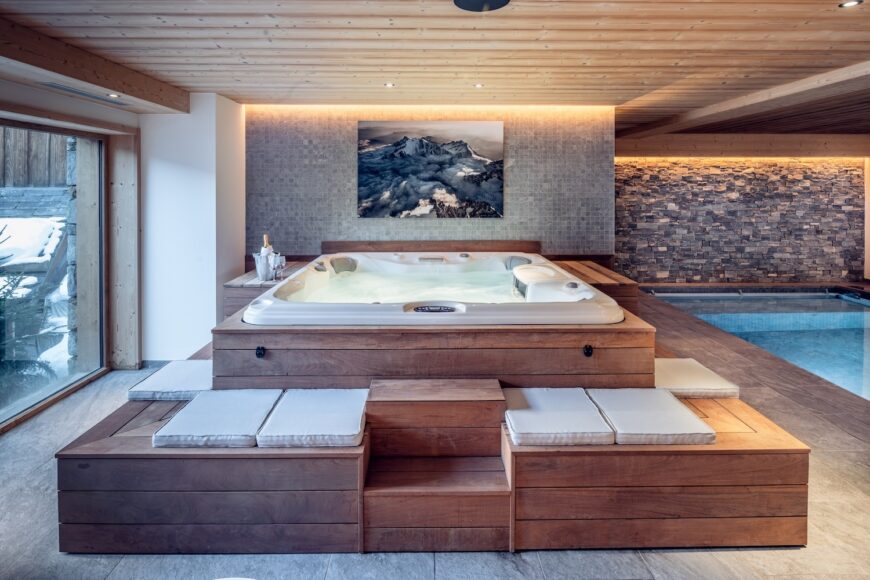
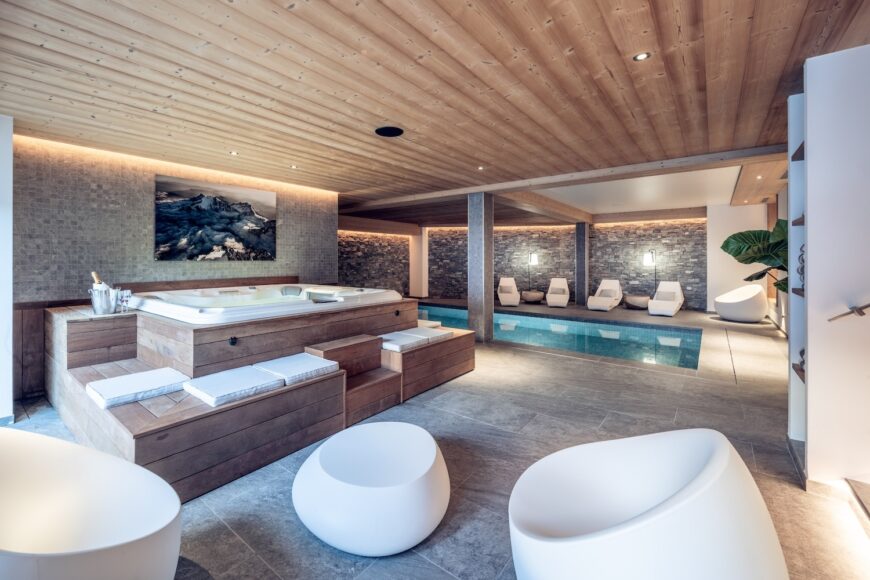
This philosophy extends decisively to the wellness and entertainment facilities. The spa area is configured not as an afterthought, but as a dedicated, professionally-equipped area to warm up and wind down. An 8-metre swimming pool, hot tub, sauna, steam room, and fitness area are spaciously arranged to accommodate multiple guests without a sense of crowding. The adjacent treatment room, with on-demand therapists from services like Massage Me, transforms it from an amenity into a 24-hour wellness retreat. Similarly, the cinema room with its tiered seating is a genuine screening room, not a repurposed bedroom. These are spaces that understand the reality of large-group dynamics.
The property’s architecture is matched by a service level protocol that operates with similar curated foresight. Chalet Harmony’s significance is amplified by its position within the Purple Ski portfolio. Purple Ski has been operating since 1991, which in Alpine terms is long enough to have seen fashions rise, peak, and quietly embarrass themselves. That longevity is evident in what the company does not do. There is no sense of trend-chasing, no attempt to rebrand skiing as something else. Instead, Purple Ski operates on a model of consistency, discretion, and anticipation. Arguably, qualities that tend to matter more to repeat clients than novelty ever could.
The operator has cultivated a reputation not for volume, but for a highly selective, deeply serviced approach. Harmony is not a speculative build; it is the result of a specific vision, shared by owners and operator, for what Alpine hospitality can be.
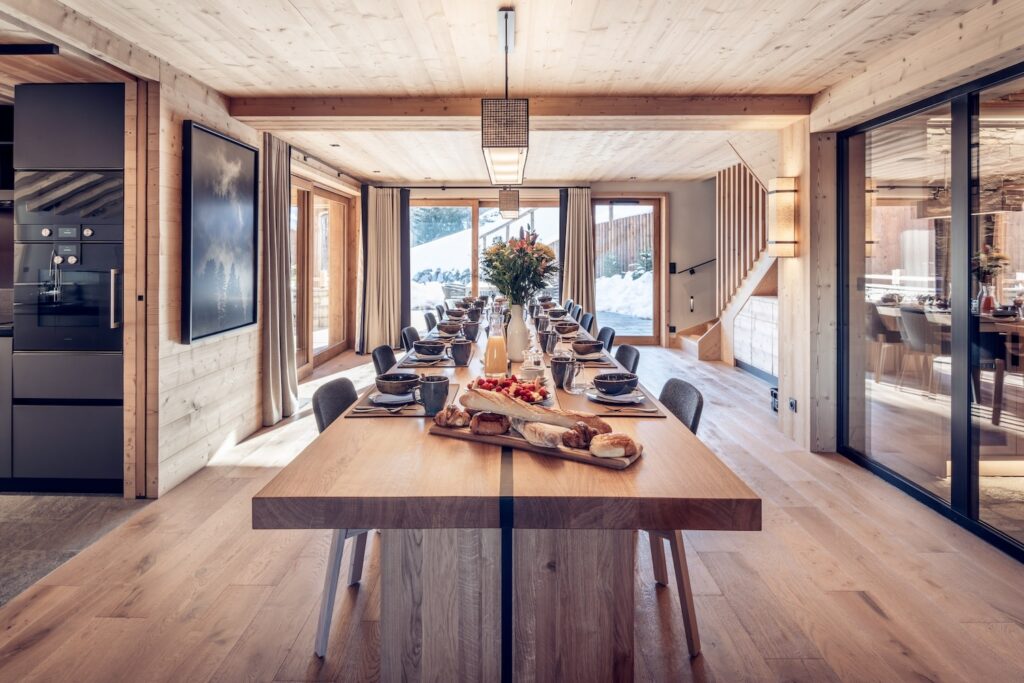
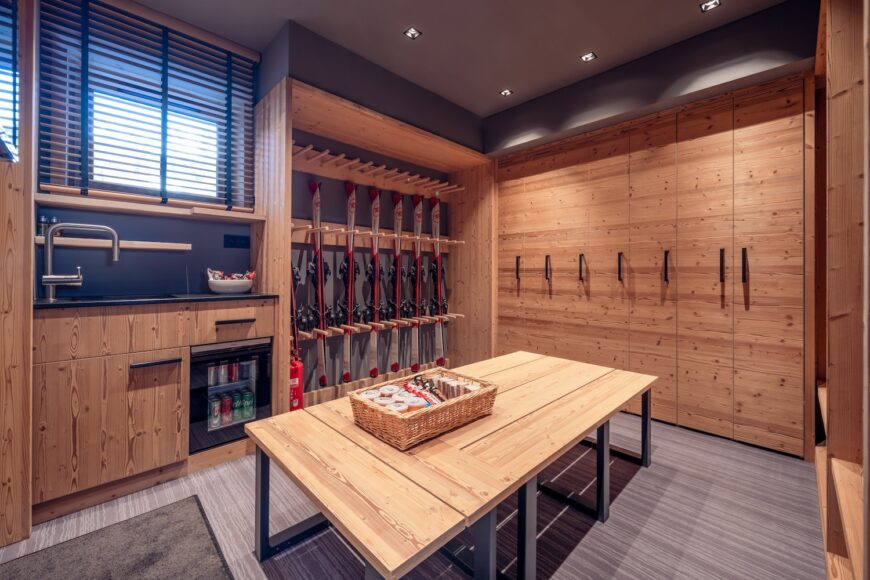
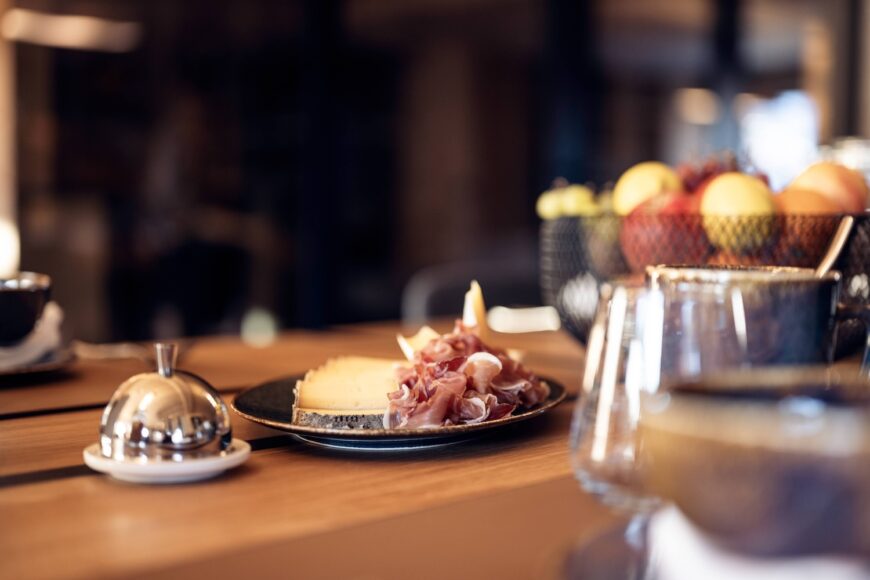
The service model is, of course, anticipatory rather than reactive. The inclusion of an in-chalet ski fitting with White Storm, eliminates the typical first-morning scramble. The private chauffeur, available until midnight, functions as an extension of the chalet’s footprint into the resort. However, the cornerstone remains the culinary programme. Under a chef like David Leon, meals are highly curated events. A menu progressing from oysters with a passion fruit mignonette to beef tenderloin with foie gras is not mere catering; it is a deliberate, gastronomic narrative that anchors the day. It’s a level of craftsmanship you expect at a metropolitan restaurant, yet delivered in the heart of the Alps.
Purple Ski’s model is built on removing friction points. The in-chalet ski fitting erases the rental shop queue. The dedicated chef and host team manage the delicate balance between presence and invisibility. The wine cellar, stocked with domaine-bottled vintages and Purple Ski’s own Château de Candie Viognier, alongside a pour of Taittinger or Veuve Clicquot that requires no request, facilitates an atmosphere of unscripted generosity. It’s a chalet team that understands the value of its guests’ time and social capital, ensuring both are spent on experience, not logistics.
Time off the slopes defines a trip as much as the skiing itself. The property’s concierge can, of course, facilitate access to Méribel’s more distinctive offerings. Lunch at Le Clos Bernard in the Altiport forest remains a rite of passage. Its inaccessibility by road preserves its character, making the journey by ski or horse-drawn carriage part of its charm. It is a steadfast reminder of the region’s rustic heritage.
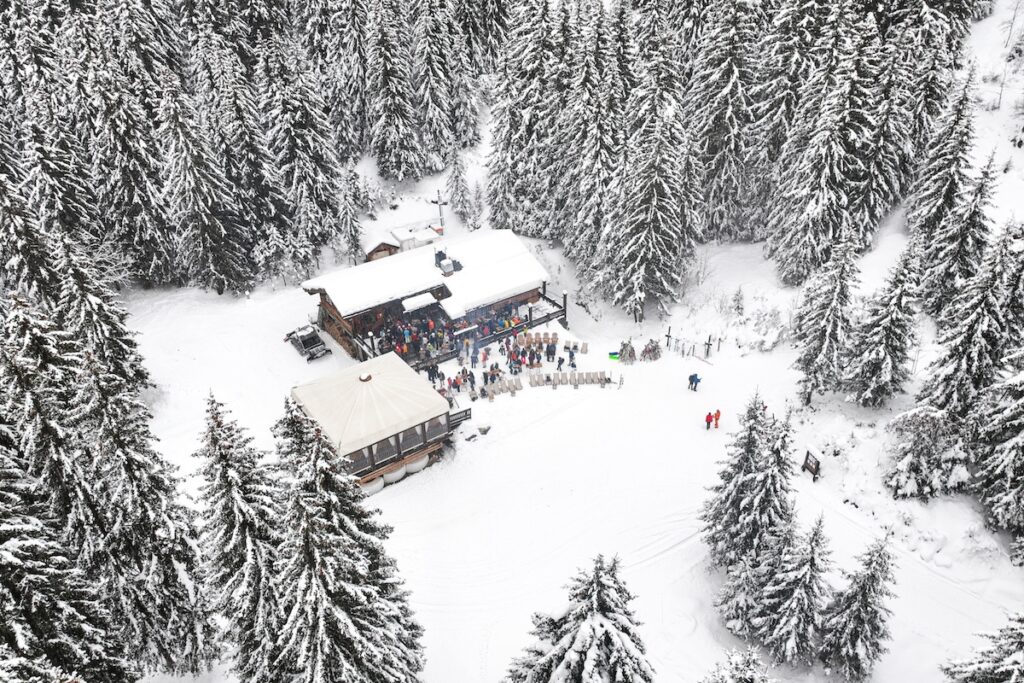
For a more traditional but no less considered taste of Savoyard sensibility, Le Cepe in the village centre is essential. As the name suggests, there is a particular emphasis on the region’s bounty of wild mushrooms, woven into hearty, precise dishes that speak of terroir rather than trend. It is the kind of assured, locally-focused restaurant that sustains a resort through decades, offering a counterpoint to the high-altitude theatrics of La Folie Douce.
If you do manage an off day, I would implore you to visit the Aéroclub de Méribel. A flight from the historic Altiport in a Jodel D-140 Mousquetaire, or the lighter “Abeille” model, will leave you breathless. It is as much a lesson in alpine geography and aviation history. The aircraft’s panoramic canopy offers an unobstructed, awe-inspiring vantage of the Three Valleys’ glacial formations, a perspective that recontextualised my understanding of the terrain.
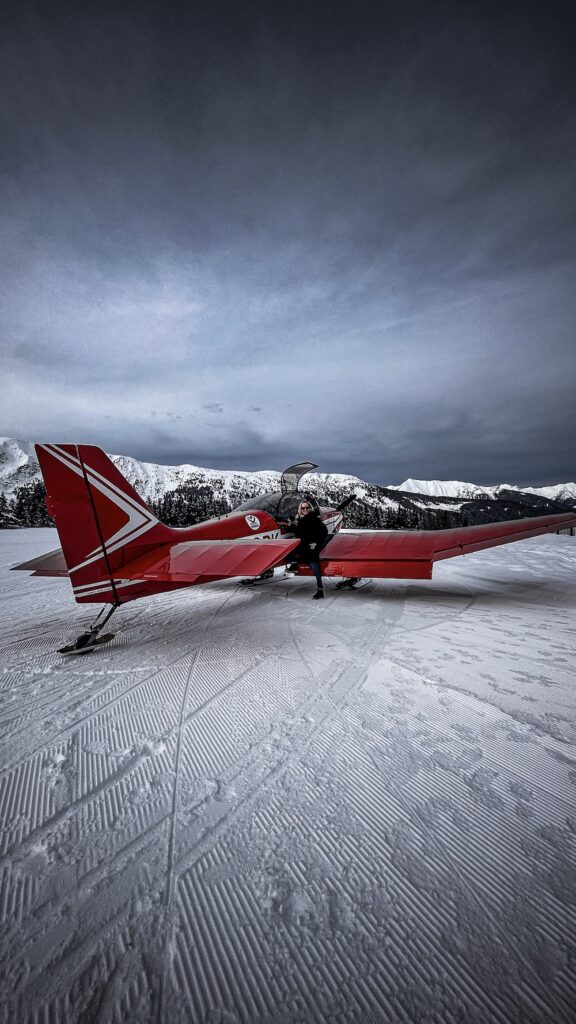
Whilst on the topic, private aviation is also well integrated. Geneva (GVA) is a standard 2.5-hour transfer, while Chambéry (CMF) and Grenoble (GNB) offer closer, often more efficient alternatives for smaller aircraft. The most direct entry, however, is the Méribel Altiport (MFX). Capable of handling turboprops like the Pilatus PC-12, it allows for a helicopter or very short ground transfer to the chalet. A decisive factor for those compressing travel time.
Chalet Harmony arrives at a moment of maturation in the luxury ski market. It represents a shift from opulent, sometimes impersonal, grandeur towards a more residential, experience-focused ethos. Its success is underscored by its immediate recognition, having been awarded the title of “World’s Best New Ski Chalet” at the 2024 World Ski Awards. This property also signals Purple Ski’s strategic direction. The announced development of Chalet Cervinia in Val d’Isère for December 2025, another new build from the owners of the acclaimed Chalet Inoko, indicates a committed move towards owning and operating properties of specific architectural and experiential calibre. This curated expansion strengthens their positioning as a custodian of a distinct standard of alpine living.
Chalet Harmony, therefore, establishes its relevance not through hyperbole, but through a profound understanding of its audience’s unspoken requirements. It succeeds not by being the most ostentatious, but by being the most considered. Its value lies in the intelligent architecture that frames the mountain, the deeply embedded and personalised service, and its role as a portal to Méribel’s genuine character. It is a property for those who have moved beyond the need for overt statement and instead seek architectural coherence, spatial discretion, and operational excellence. It treats security, privacy, and group dynamics as foundational design principles, not added luxuries. It is less a place to stay, and more a tool for realising an impeccable mountain sojourn on one’s own terms. It represents not just a new option in Méribel, but a new and persuasive benchmark for what a chalet should be.
Chalet Harmony does not attempt to reinvent the ski chalet, nor does it need to. Instead, it refines the form, quietly, competently, and with a high degree of class. For a readership that skis regularly, travels often, and values discretion over declaration, that restraint is its greatest strength.
Méribel, for its part, continues to do what it has always done best: hold everything in balance.